EURASIAN FORUMS AND INTERNATIONAL CONFERENCES
During the reporting period, the Agency annually conducts international seminars, conferences and forums with the participation of foreign and national experts for the training of review experts.
The annual Eurasian Forum on Quality Assurance in Higher Education is a platform for discussing the most relevant issues in the field of higher education and quality assurance with the participation of national and international leading academics, politicians, government officials, activists, labor market representatives and students, as well as all interested parties.
In addition, IQAA regularly conducts seminars, conferences and workshops with the involvement of international speakers. The list of events is available in the Press Center tab.
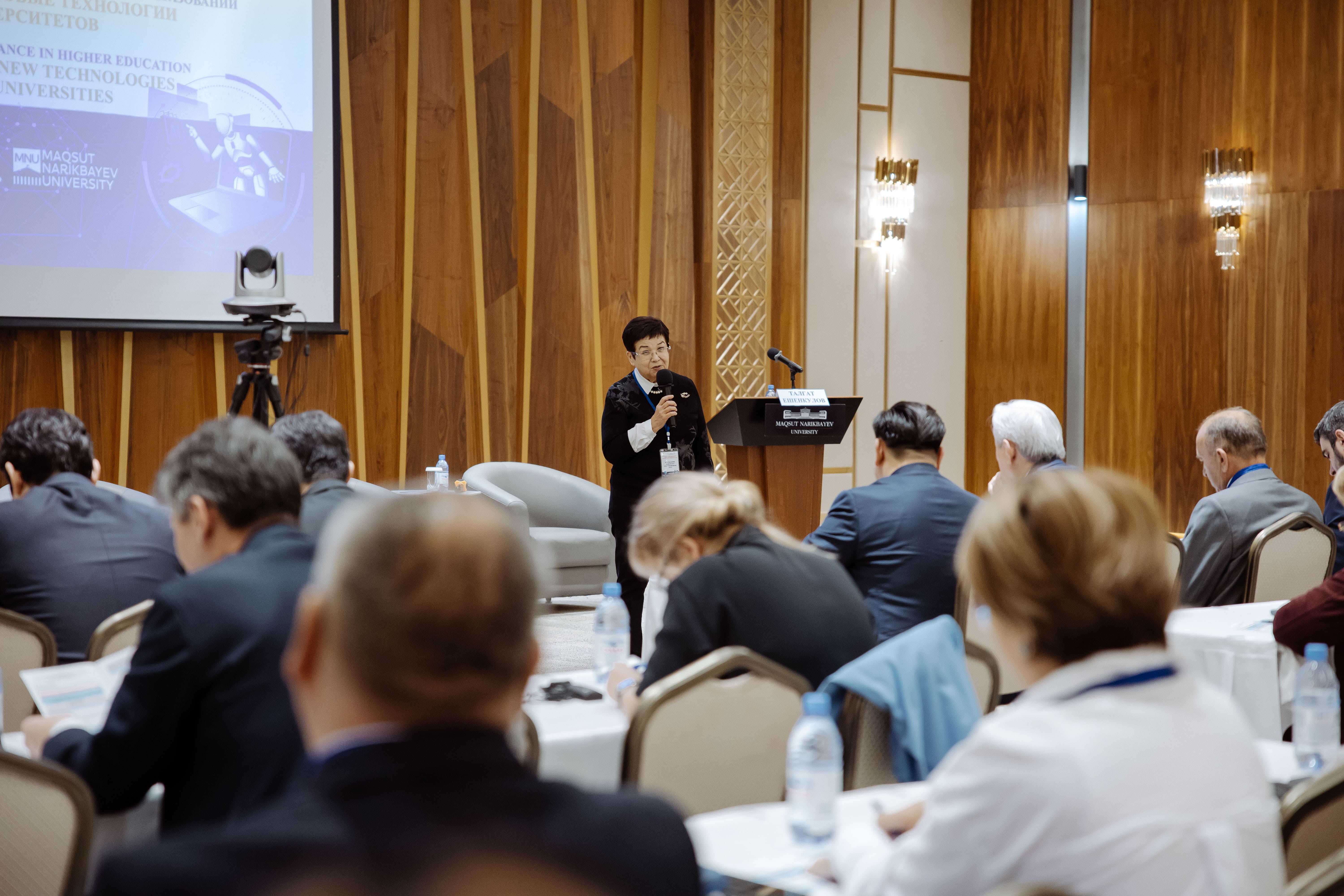 The Forum brought together a wide audience of participants, including rectors and vice-rectors of Kazakhstani universities, public figures, national and international experts, heads of foreign accreditation agencies, faculty members and staff of university structural units, as well as representatives of universities from Tajikistan, Kyrgyzstan, Uzbekistan, and Azerbaijan. Read more
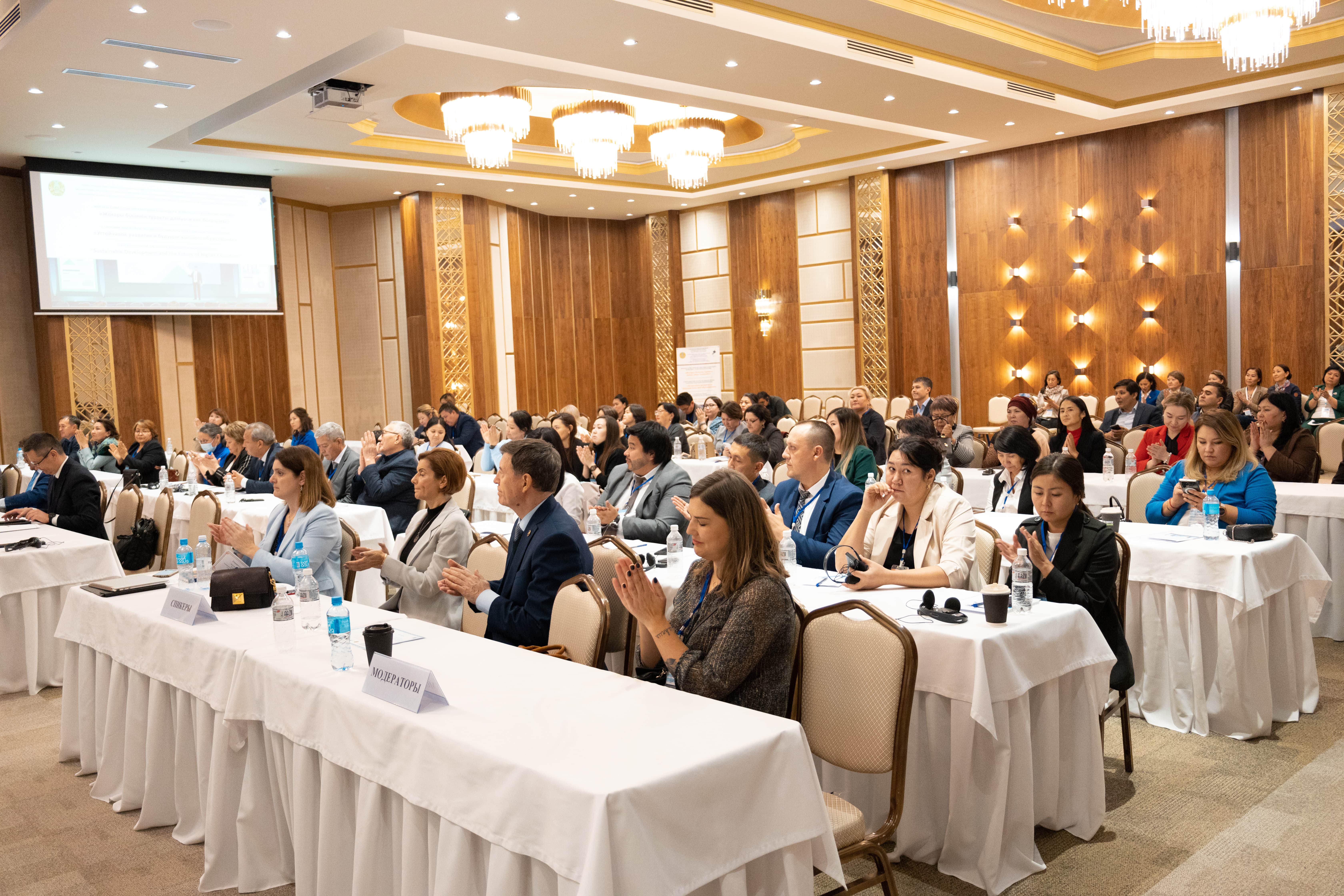 The Forum was attended by more than 200 people from among the representatives of the academic community: rector, vice-rector of universities in Kazakhstan, public figures, national and international experts, heads and teachers of universities in Kazakhstan, Tajikistan, Russia, Lithuania and Azerbaijan. Read more
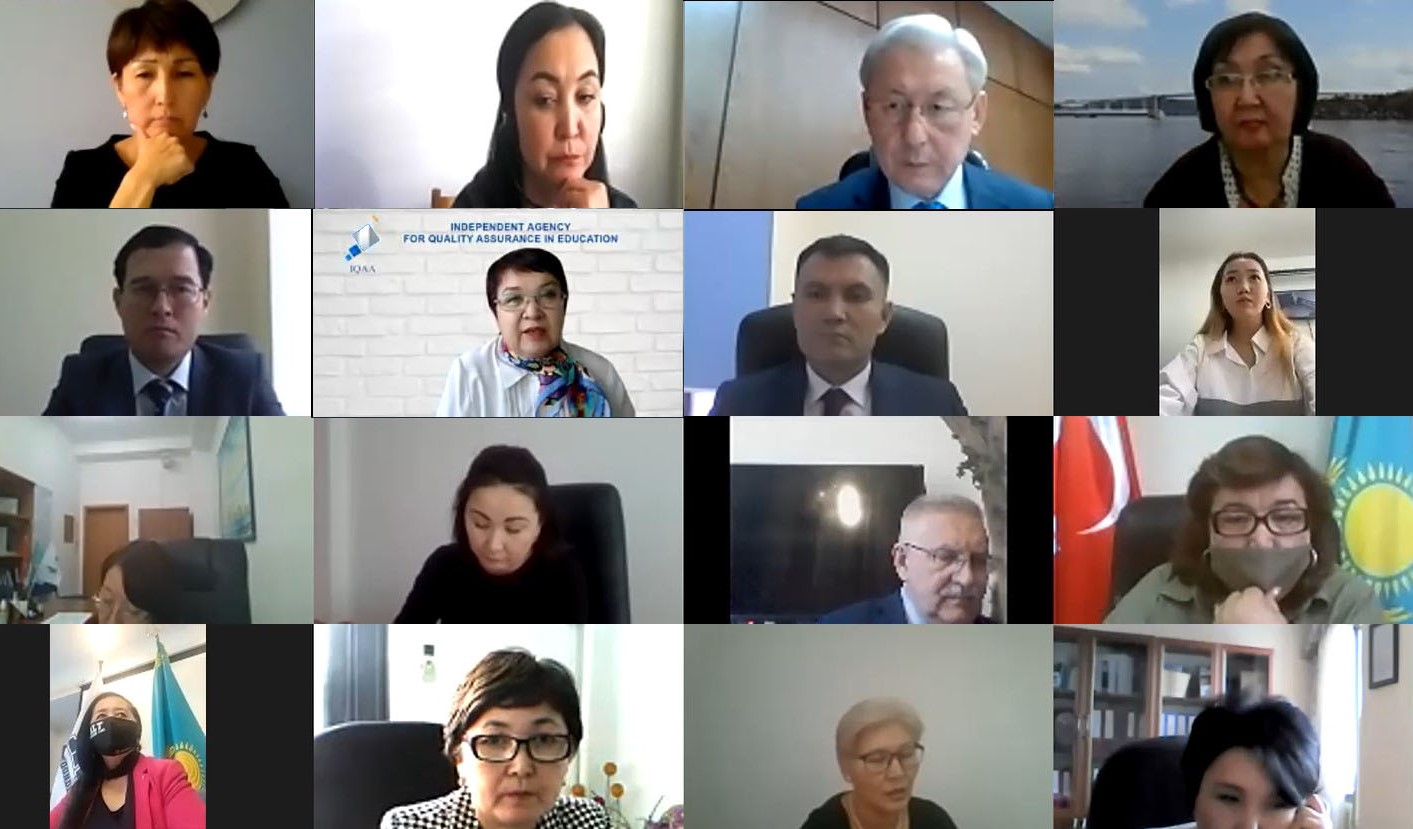 This year, the 6th annual Eurasian Forum coincided with the 15th anniversary of the Agency. Over 220 people (112 offline and 111 online) from more than 60 universities and organizations in education sphere from Kazakhstan, Russia, Uzbekistan, the USA, Spain and Estonia took part in the Forum. The topic of the Forum “New ways to transform higher education” consisted of two sessions: University Digital Culture and Micro-Credentials and Micro-Qualifications. Read more
The theme of the Forum is directly related to the goal of the UN agenda of September 25, 2015 in the field of sustainable development until 2030 - "Education for sustainable development". The forum addressed topical issues such as the availability of education for everyone, lifelong learning, digitalization in the higher education system, etc. The speakers of the forum were the rectors, vice-rectors and representatives of leading Kazakhstani universities, as well as foreign representatives of UNESCO, the Department of Education and Knowledge , accreditation agencies and universities from Canada, the United Arab Emirates, Lithuania, the United Kingdom, the Russian Federation and Uzbekistan. Read more
The Forum touched upon many relevant issues in the field of the internal quality assurance system of HEIs, in particular: features of the organization of the internal quality assurance system, new models and concepts of IQA, successful practices, difficulties and ways to ensuring the internal quality of education in HEIs. Rectors, vice-rectors and representatives of leading Kazakhstani universities, as well as foreign accreditation agencies and HEIs from Austria, Spain, Lithuania, Germany, the Republic of Azerbaijan, the Russian Federation, the United Kingdom, Estonia and Belgium took part in the forum. Read more
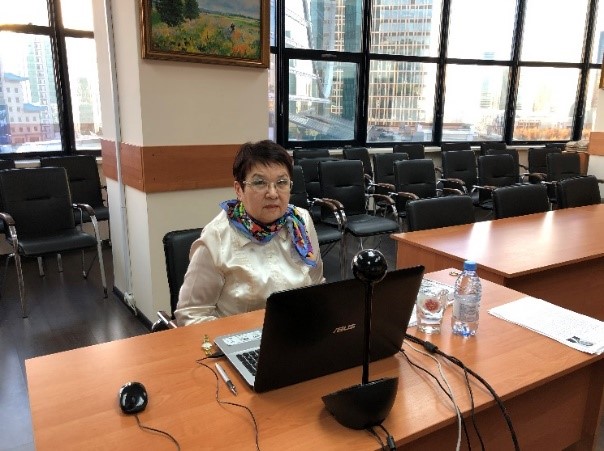 The topic of the forum was dedicated to distance education in the context of the pandemic. The form was attended by almost three hundred participants – 286 people. Among the international speakers there were 11 people from accreditation agencies and universities from Austria, Azerbaijan, Great Britain (QAA), Kyrgyzstan (AAERO), Lithuania (SKVC), Russia (AKKORK), Ukraine and Estonia (EKKA). The Eurasian Forum allows all participants to get up-to-date information in the international context first-hand on behalf of the world's leading experts in the field of education and quality assurance. Read more
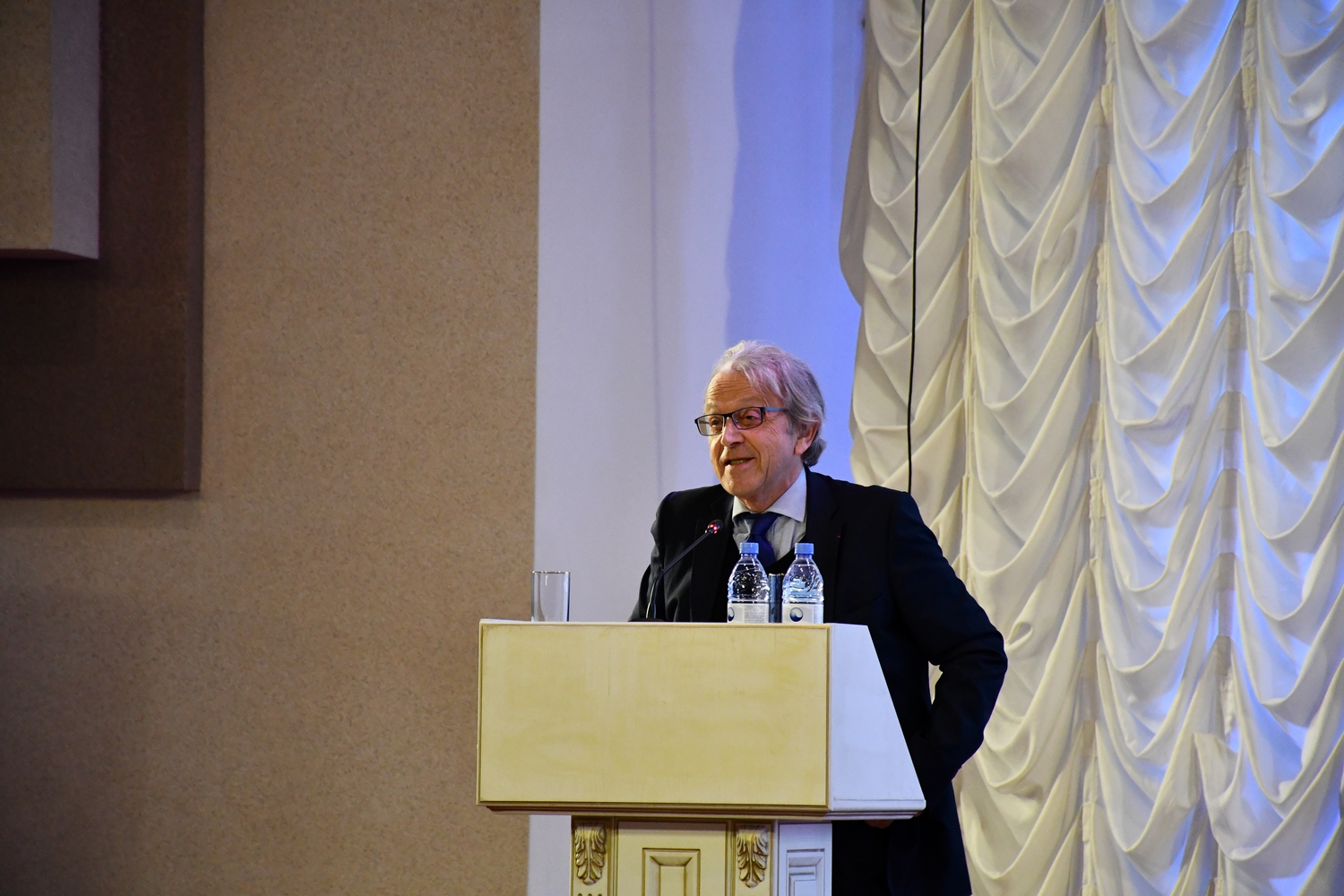
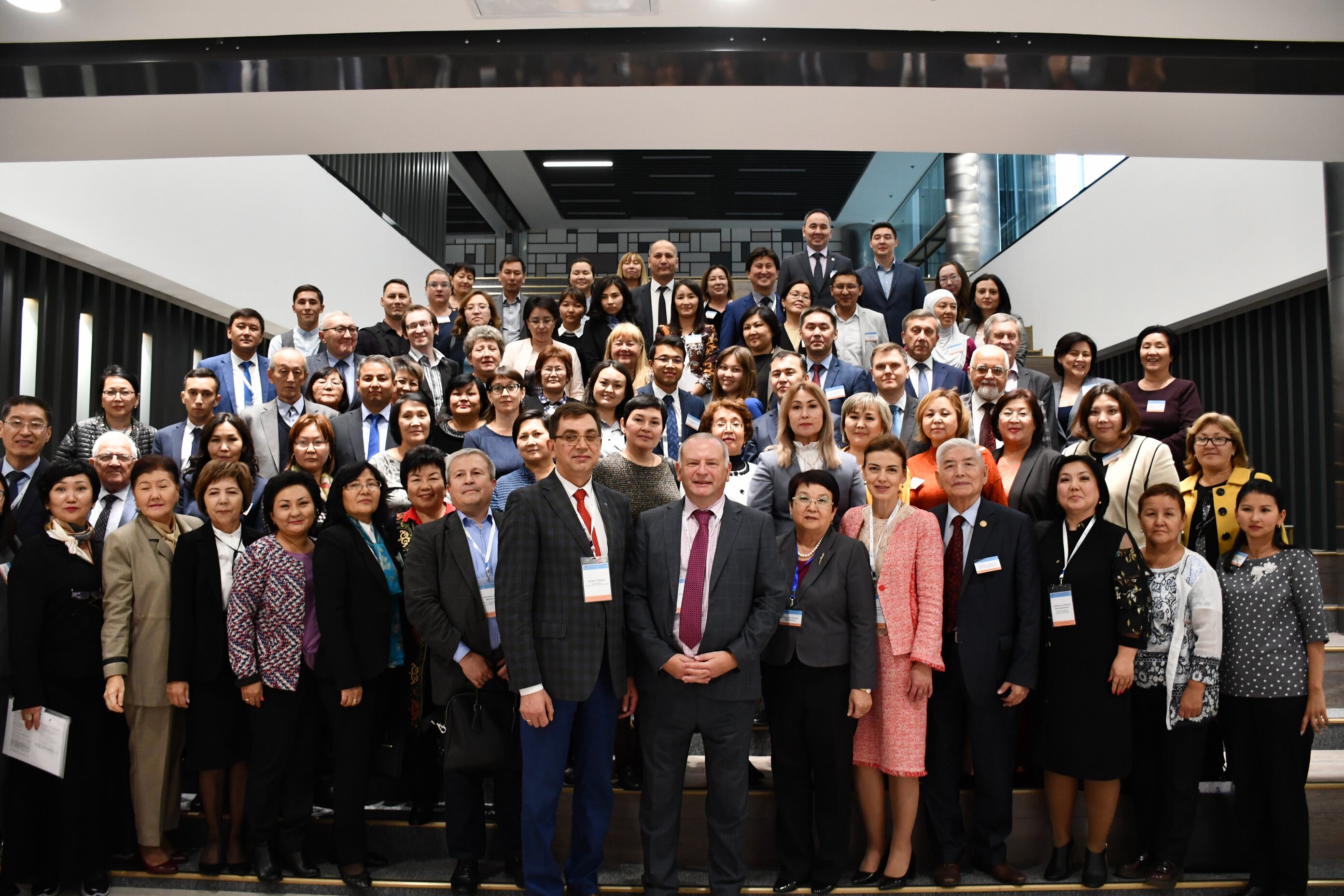 The keynote address was delivered by the President of EQAR, Prof. Karl Dietrich "Quality, quality assurance and cooperation in the era of digitalization". QAA CEO Douglas Blackstock presented a presentation on "Quality Assurance and Improvement in the Digital Age: the United Kingdom Approach». Kazakhstan's rectors, vice-rectors, and professors told how digitalization and quality assurance are implemented in Kazakhstan's educational institutions. Since the topic of the Forum was relevant, the Forum received a national format, because on the basis of the Forum, TV released a movie about digitalization in education with the participation of the Chairman of the IQAA Supervisory Board, Professor Zhaksybek Kulekeyev, President of EQAR, prof. Karl Dietrich, QAA CEO Douglas Blackstock and other forum participants. Read more
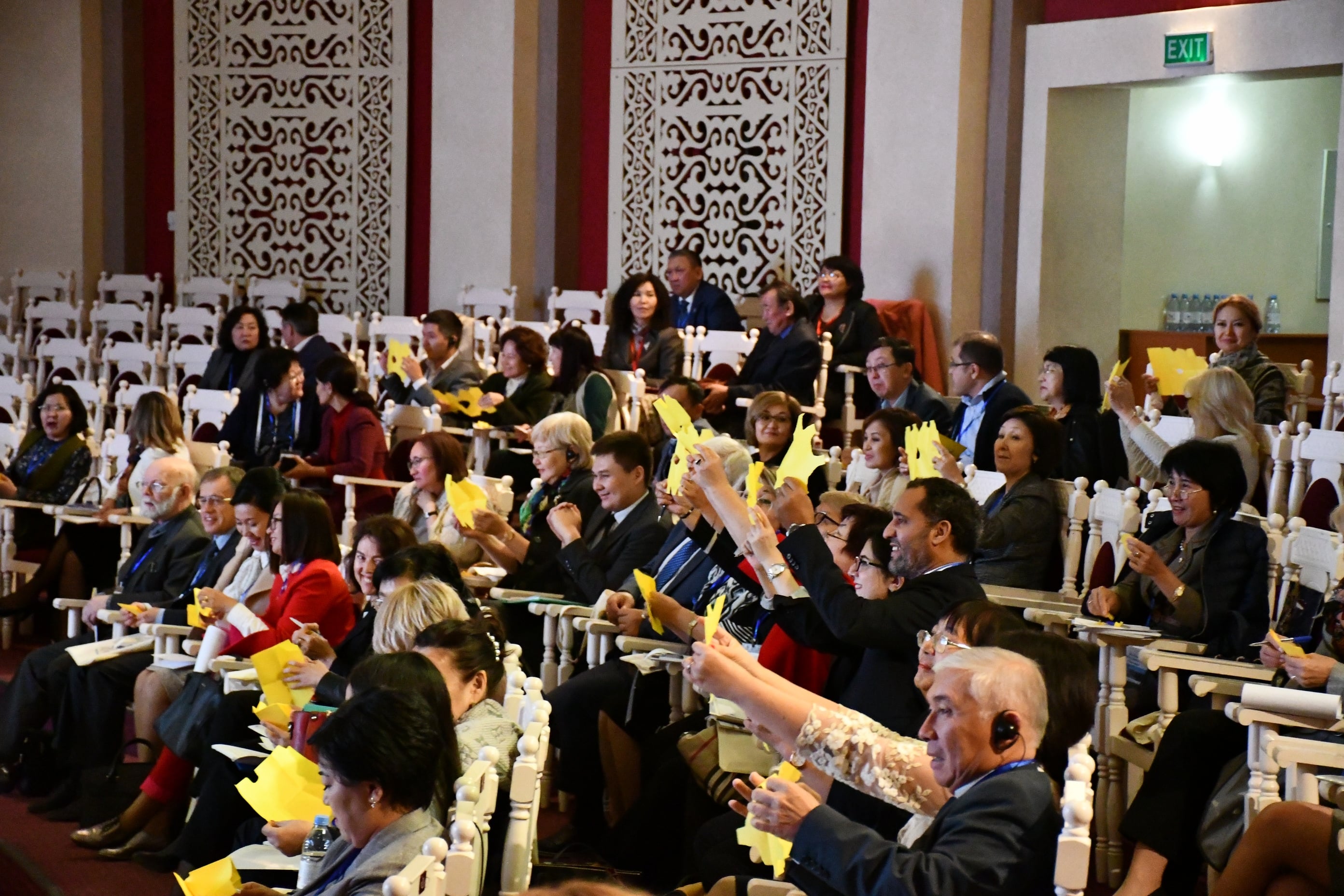 Key speakers were Colin Tuck (EQAR), Academician of the Russian Academy of Sciences A. Verbitsky (Russia), Petra Pistor, Quality manager at the Centre for Higher Education Development and Quality Enhancement (CHEDQE), University of Duisburg-Essen, Germany, Michele Wera, Senior policy advisor, Accreditation Organisation of the Netherlands and Flanders (NVAO, Netherlands), Dr. Maiki Udam and Prof. Peeter Jarvelaid (Estonia), Esther Huertas Hidalgo, Senior Advisor, Quality Assurance Department, Catalan Agency for Quality Assurance in Higher Education, PhD, (Spain) and national review experts. Read more
During the conference, about 40 speakers, who are authoritative experts in the field of education, presented their works and findings. The conference was an important international event that unites all five continents of the Earth, from 60 countries of the world. International experts in higher education, leading UNESCO experts, representatives of the Ministry of Science and Higher Education of RK, representatives of foreign and local accreditation agencies and universities took part in the conference. Read more
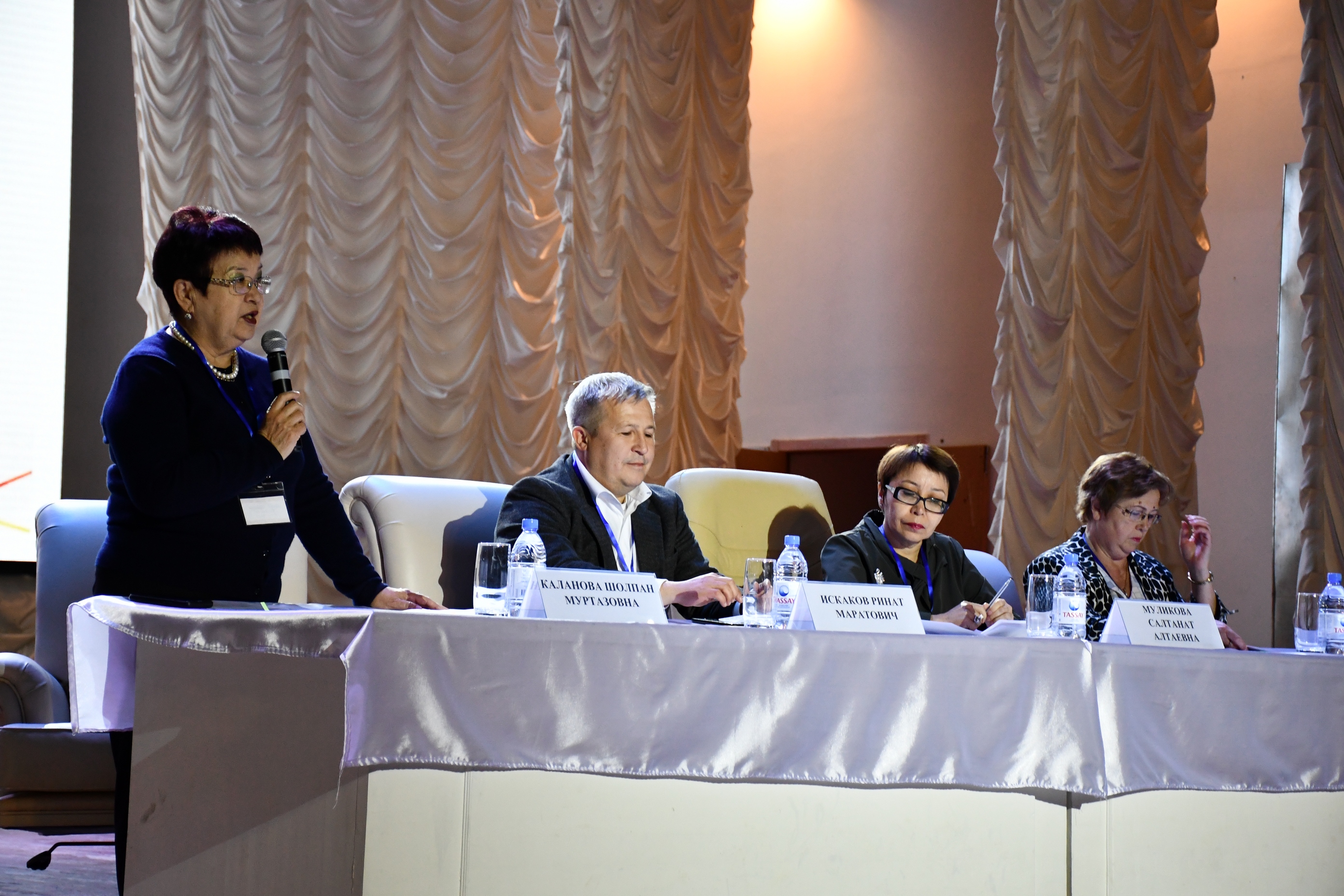
Professors from Russia and Latvia were invited as international experts to present at the conference. In total, more than 110 people took part in the conference. IQAA employees organized 4 focus groups, which examined the quantitative and qualitative indicators used by review experts when writing external audit reports, the stages of preparing the external review report, the issues of interview preparation and ethical aspects in the work of the review expert. Read more
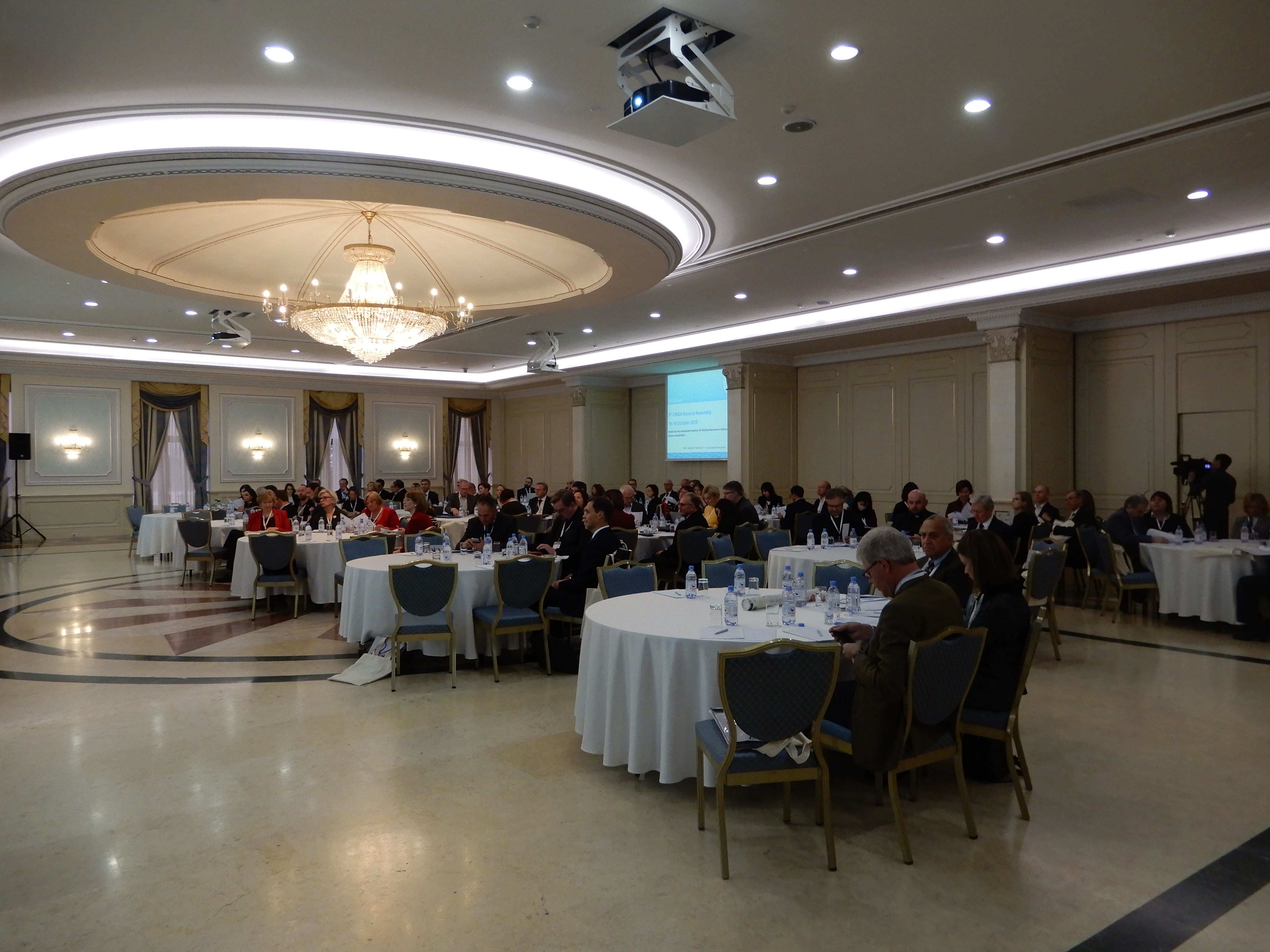
The survey of the Assembly participants conducted by the ENQA secretariat showed a high rating of the ENQA members on the organization and management of the event, 70% - 5 points, 30% - 4 points on a five-point scale. Read more
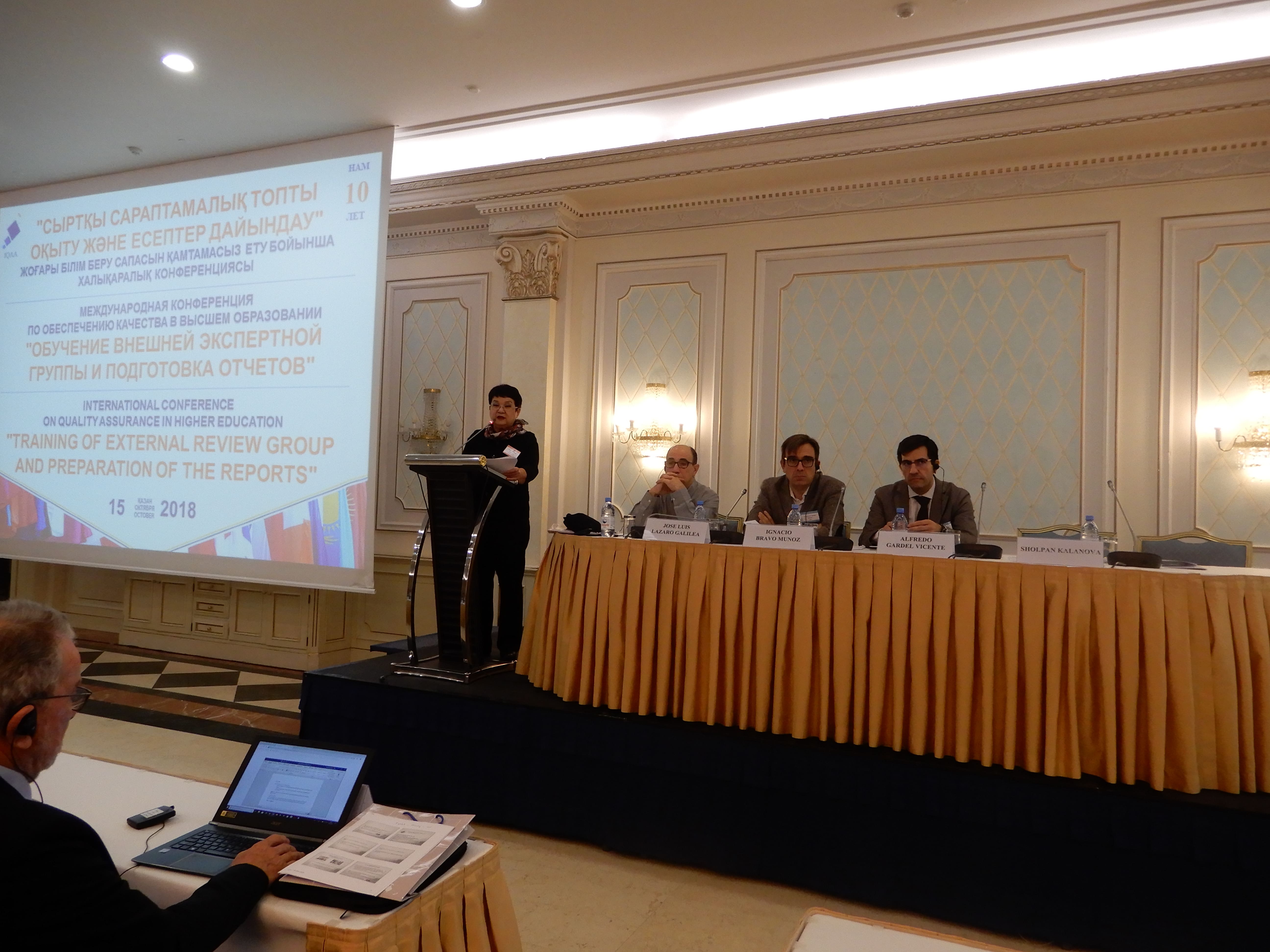
At this conference, representatives of the French agency HCERES spoke: member of the Board of ENQA Francois Pernot and Solange Pisarz; professors of the University of Alcala (Spain): Alfredo Gardel Vicente, Jose Luis Lazaro Galilea, Ignacio Bravo Munoz; Professor of the University of Clermont Auvergne (France) Marie-Elisabeth Baudoin; Professor, President of the European Network for Accreditation of Educational Engineering Programs (ENAEE) (France) Bernard Remo, Director, National Center for Quality Assurance of Vocational Education (ANQA) (Armenia) Ruben Topchyan. Read more
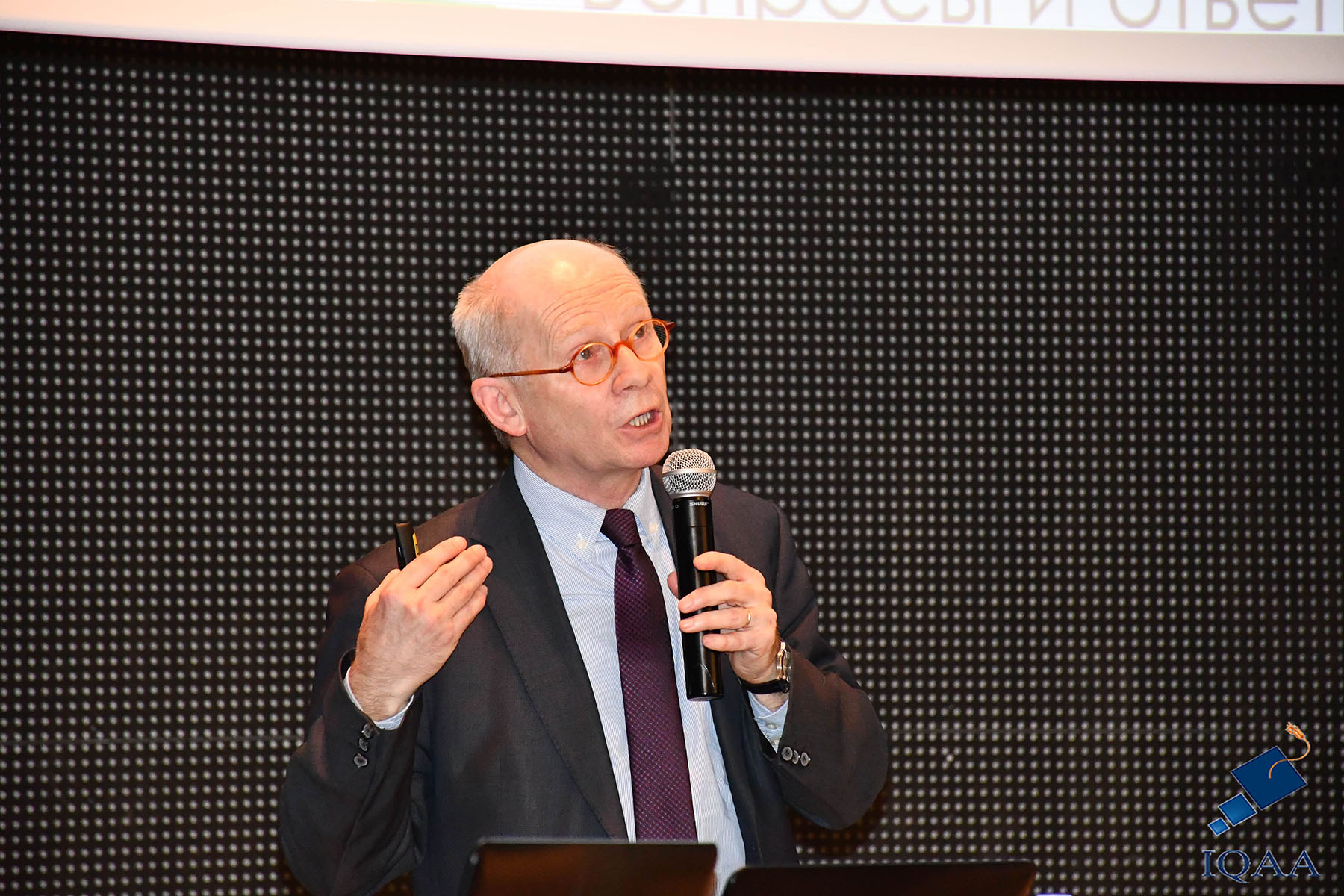
For this event, the book "A Manual for Internal Quality Assurance in Higher Education" by Lucien Bollaert was translated into Russian by IQAA. EURASHE gave its permission to publish 200 copies of the books, so all participants of the conference were able to receive a translated edition of the author's book. Read more
Materials on student-centered learning published by ESU were translated and published for the conference participants (over 100 people). Read more
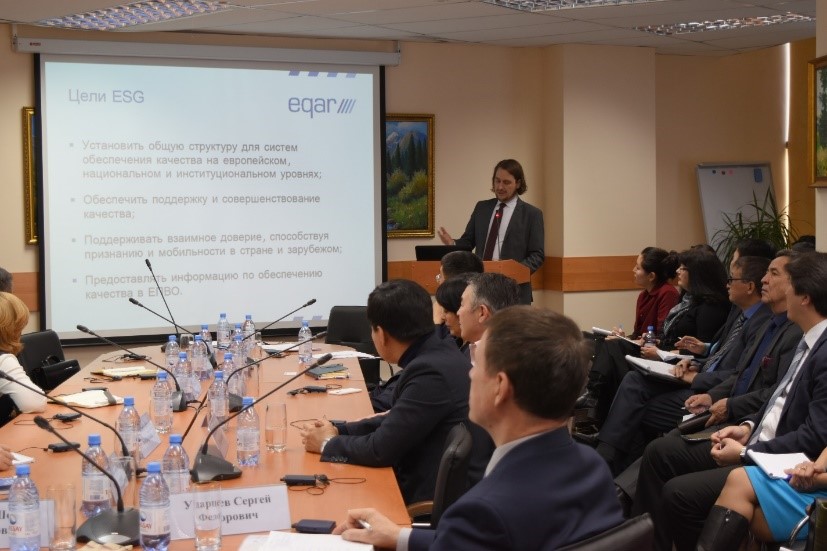 The seminar covered the following topics: ESG 2015-major changes; The role of EQAR in the European Higher Education Area; External quality assurance across borders; Quality assurance of joint educational programs. Read more
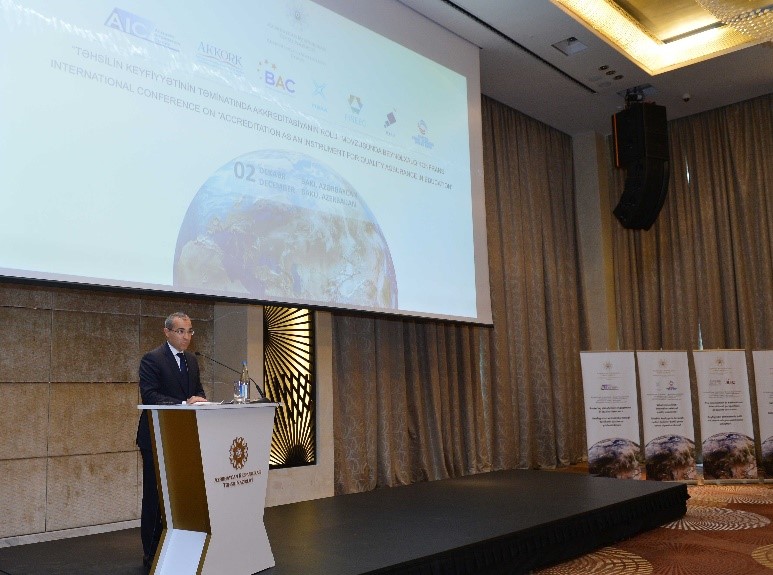 The purpose of this conference was to discuss quality management issues, exchange knowledge and best practices on creating effective quality assurance systems, and consider the prospects for further cooperation. Read more
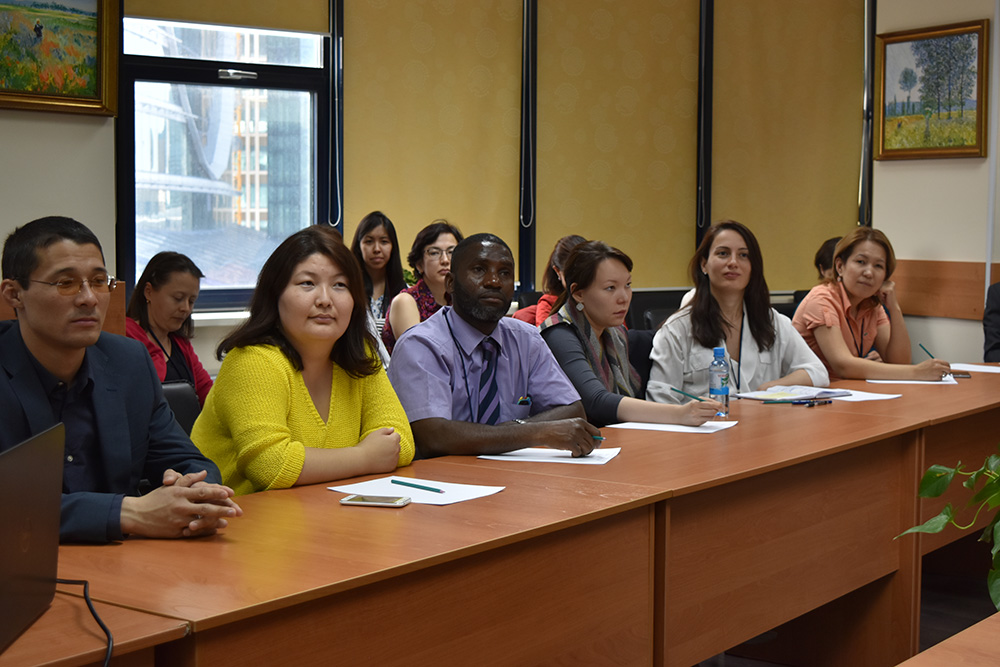 A group of participants of the British Council Student Mobility Program, organized by the Nazarbayev University Higher School of Education in cooperation with the University of Oxford, visited IQAA to familiarize themselves with the agency's activities and accreditation procedures for educational institutions in Kazakhstan. Read more
IQAA DOCUMENTS
ANNUAL REPORTS

ANNUAL WORK PLANS
STANDARDS




REGULATIONS


ХАЛЫҚАРАЛЫҚ ЫНТЫМАҚТАСТЫҚ
IQAA сапаны қамтамасыз ету және жоғары білім беру саласында халықаралық деңгейде жұмыс істейтін ұйымдармен тығыз қарым-қатынас орнатуға тырысады. IQAA халықаралық ынтымақтастықты орнатудағы серіктестеріне Инженерия, информатика, жаратылыстану ғылымдары бойынша білім беру бағдарламаларын аккредиттеу агенттігі (ASIIN), Білім берудегі сапаны қамтамасыз ету және аккредиттеу жөніндегі австриялық агенттігі (AQ), Эстонияның жоғары білім сапасы жөніндегі агенттігі (EKKA), Іскерлік мектептер мен бағдарламалар жөніндегі аккредиттеу кеңесі (ACBSP), Аккредиттеу, сертификаттау және сапаны қамтамасыз ету институты (ACQUIN), Іскерлік-әкімшілік бағдарламаларын аккредиттеу жөніндегі халықаралық қоры (FIBAA), Колледждер мен мектептердің мемлекеттік қауымдастығы - Бастауыш және орта мектептер үшін комиссия (MCA-CESS), Жоғары білім беру сапасын және стратегиялық көзқарасты қамтамасыз ету жөніндегі Арагондық агенттігі (ACPUA), Кәсіптік білім берудегі сапаны қамтамасыз ету ұлттық орталығы (ANQA), Жоғары білім беру сапасын бағалау орталығы Орталығы (SKVC) және Польша аккредиттеу комитеті (PKA) жатады.
Сонымен қатар IQAA Жоғары білім беру сапасын қамтамасыз ету жөніндегі агенттіктердің халықаралық желісінің (INQAAHE), Жоғары білім берудегі сапаны қамтамасыз ету жөніндегі Еуропалық қауымдастықтың (ENQA), Азия-Тынық мұхиты сапа кепілдігі желісінің (APQN), Орталық және Шығыс Еуропадағы жоғары білім сапасын қамтамасыздандыру бойынша желісінің (CEENQA) және Халықаралық сапа тобы CHEA (CIQG) мүшесі болып табылады.
FEEDBACK
Dear visitors!
This tab is intended for feedbacks. Here you can ask a question, send comments, or suggestions.
To send a message, select the topic you are interested in and fill in the appropriate fields. Correct and complete filling in the fields of the application form will help us to respond to you quickly and efficiently.
Additional contact information is in the CONTACTS section.

SUBMIT APPLICATION
IQAA ACADEMIC EXPERT SELECTION CRITERIA
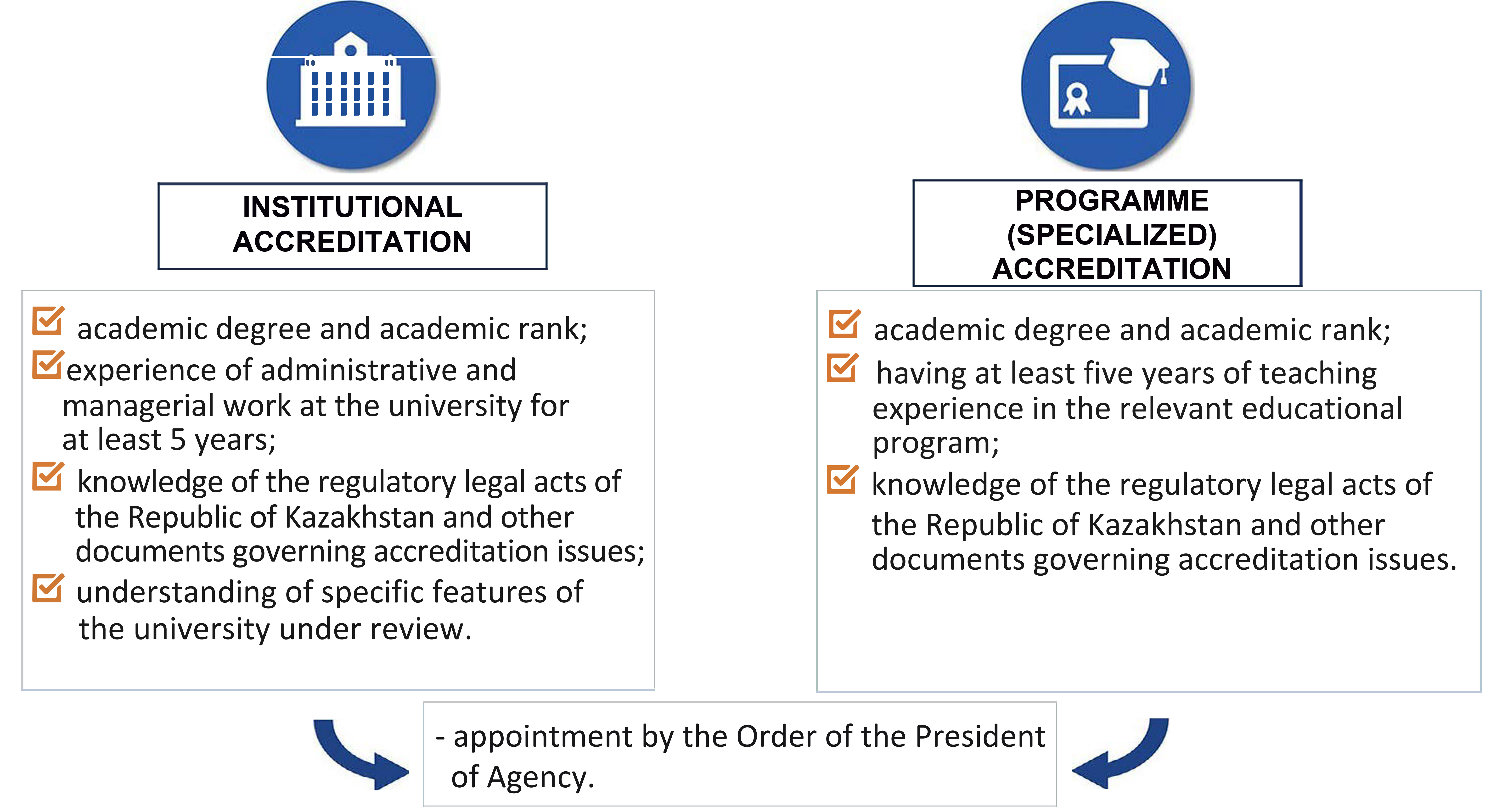
The nomination and appointment of external experts are carried out independently by the Agency on the basis of a database, regardless of third parties, such as universities or government agencies. IQAA ensures that the members of the expert groups are competent and free from conflicts of interest. The IQAA expert commission for educational program groups provides recommendations for improving the existing database of qualified IQAA experts.
TRAINING OF IQAA EXPERTS
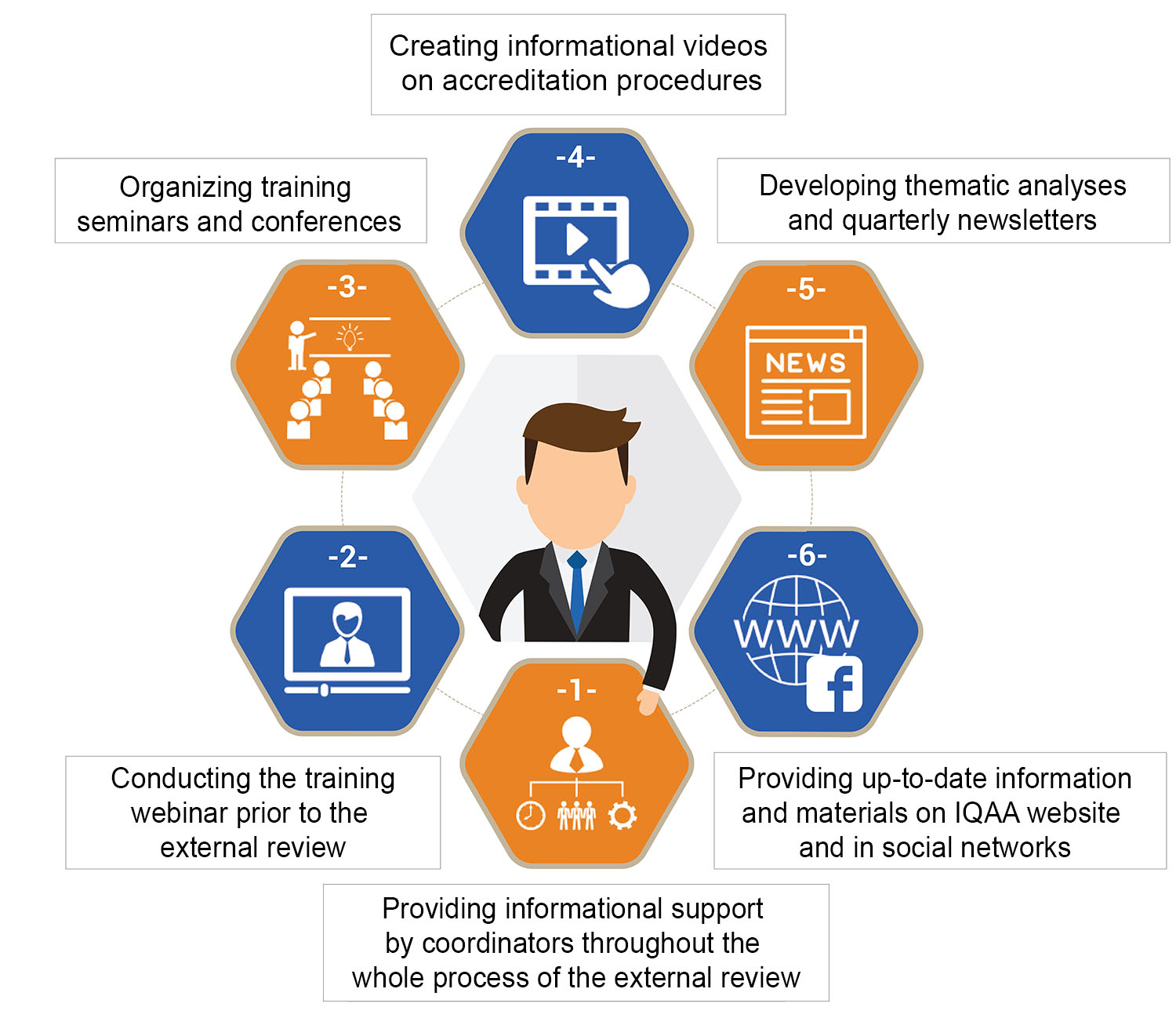
The right selection and training of experts is the basis for a successful external audit process. In order to ensure the professional quality of the work of its external experts, IQAA regularly conducts training seminars, video conferences, webinars, and briefings on the accreditation procedure and audit methodology prior to the external evaluation. Participation in the training is a prerequisite for all experts. The Agency also develops various types of training materials, including manuals, videos, newsletters and thematic analyses.
On January 21, 2025, IQAA held a training seminar for experts in the field of accreditation and external quality assessment of higher education with the issuance of an international expert certificate for a period of 3 years. The event was attended by 147 experts from universities in Kazakhstan, Russia and Azerbaijan.More
IQAA EXPERT DATABASE
National experts
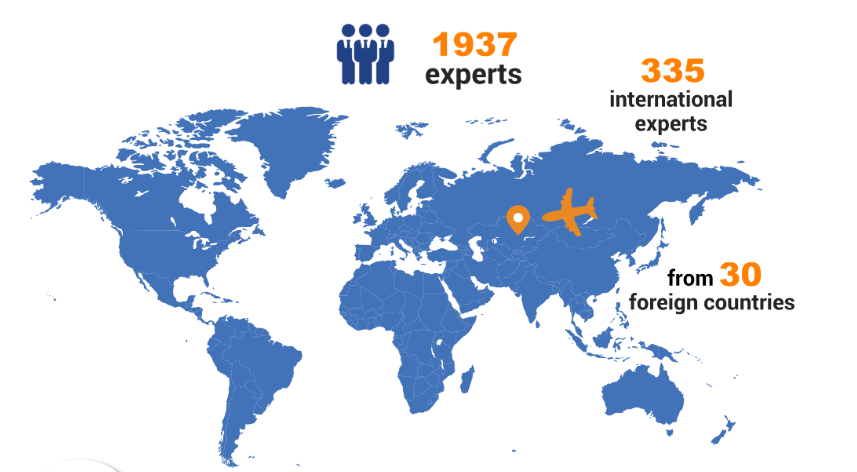
The database of national academic experts is formed on the basis of recommendations from Kazakhstani universities, Expert Commissions of the Agency, and also on the basis of personal applications.
International experts
International experts are nominated: 1) by foreign accreditation agencies with which IQAA has signed memoranda on collaboration; 2) on the basis of direct requests to the rector's offices, faculties, departments of European universities; 3) through online search for competent experts; 4) based on personal requests from professors.
Representatives of employers
Employers are nominated by suggestions from various professional associations and employers' unions, such as the National Industrial Chamber, the Regional Chamber of Entrepreneurs "Atameken" and a range of business organizations.
Representatives of students
The selection of students as IQAA experts is conducted following recommendations from universities and the Alliance of Students of Kazakhstan that provide the Agency with a list of the best and most active students.
More...
THE BOLOGNA PROCESS IN KAZAKHSTAN
In March 2010, Kazakhstan officially joined the Bologna Declaration and became the 47th member of the European Higher Education Area and the first Central Asian state to be recognized as a full member of the European Educational Area.
After joining the Bologna Process, Kazakhstan's higher education system has undergone major changes:
1. Kazakhstan's universities have joined the Great Charter of Universities, which is currently signed by more than 650 universities around the world, which will bring domestic education closer to European standards. More than 60 Kazakh universities have signed the Magna Carta.
2. The transition to a three-level model of training specialists: bachelor-master-Doctor Ph.D., based on the principles of the Bologna Declaration.
According to the National Report on the State and Development of the Education System of the Republic of Kazakhstan (based on the results of 2014), undergraduates are trained in 118 universities of the country, where 32,527 people study, of which 16,220 studies at the expense of the state order. The graduation rate of undergraduates with defense is 92%.
In 16 universities, Ph.D. doctors are being trained in partnership with leading foreign universities. The number of doctoral students in 2014 was 2,063.
3. Advanced technologies and training systems have been introduced into the educational process of higher education institutions: all higher education institutions have implemented credit technology of training, 38 have implemented double-degree education, and 42 have implemented distance learning. Modular educational programs and syllabuses are being developed in accordance with the Dublin Descriptors; a National Qualifications Framework has been created.
4. The ECTS (European Credit Transfer System) has been adopted as the basis for the transfer of credits in the course of academic mobility of students, and the new ECTS Guidelines (approved at the Yerevan Conference of Ministers of Education of European Countries on May 14-15, 2015) are being implemented.
5. The Ministry of Education and Science of the Republic of Kazakhstan allocates funds for academic mobility of teaching staff and students, and universities themselves allocate funds for academic mobility.
According to the official data of the Center for the Bologna Process and Academic Mobility, in 2014, 1726 foreign scientists were invited by 52 universities (2013 – 1533 people, 2012-1 349 people, 2011-1717 people, 2010-418 people, 2009-389 people).
785 scientists were invited from Europe, 85 scientists from East Asia, 32 scientists from Southeast Asia, 140 scientists from the United States, 498 scientists from the Russian Federation, 28 scientists from the Republic of Belarus, and 158 scientists from other countries. The invitation of foreign teachers and consultants is carried out within the framework of the state order and at the expense of extra-budgetary funds of universities.
In total, 6927 foreign scientists and consultants were invited from 2009 to 2014.
In order to develop academic mobility, in 2014, 805 students were sent to study abroad for at least 1 semester, of which 740 people went to Europe, 52 to the United States, 12 to East Asia, and 1 to the Russian Federation. 616 bachelor's and 189 master's students have trained abroad at the expense of the state budget in 2014.
In general, during the implementation of the academic mobility program since 2011, 1,520 undergraduate students and 1,043 undergraduates have completed their studies abroad in various specialties.
6. In order to promote European cooperation in quality assurance in order to develop comparable criteria and methodologies, the Ministry of Education and Science of the Republic of Kazakhstan has created a National Register of Accreditation Agencies, which, together with the Independent Agency for Quality Assurance in Education (IQAA), includes one more national and 8 foreign agencies. In the period from 2009 to 2015, NAOKO conducted institutional accreditation of 50 universities and more than 1,100 programs, attracted 153 foreign experts from 25 countries, about 1,100 national experts, including 190 students and more than 200 employers. The Agency is working on the harmonization of accreditation standards with standards and guidelines for ensuring the quality of higher education in the European Higher Education Area.
In general, according to the National Report, in 2014, 66 universities (57%) out of 115 civil ones passed the national institutional accreditation.
22 Kazakhstani universities (19%) have passed international specialized accreditation in 139 specialties of higher and postgraduate education.
In accordance with the standards of institutional and program accreditation, intra-university systems for ensuring the quality of education are being implemented and students and employers are being involved in external evaluation of the activities of universities, and a broad base of experts from among employers and students is being created.
MAIN DOCUMENTS OF THE BOLOGNA PROCESS
The Magna Carta of Universities is a document that was originally signed by 388 rectors and university leaders from across Europe and beyond on 18 September 1988, the 900th anniversary of the University of Bologna.
It contains the principles of academic freedom and institutional autonomy as a guide for the proper governance of universities.
Resource: http://www.aic.lv/bolona/Bologna/maindoc/magna_carta_univ_.pdf
Short version: The Magna Carta of Universities
Website: www.magna-charta.org
The Sorbonne Declaration was signed in 1998 by the ministers of four countries: France, Germany, Great Britain and Italy. The aim of the Declaration was to create a common system within the European Higher Education Area, where mobility should be encouraged for both students and graduates, as well as for teaching staff. It should also provide professional development in the labor market.
Resource: The Sorbonne Declaration
Short version: The Sorbonne Declaration (1998)
Website: www.ehea.info
The goals of the Sorbonne Declaration were confirmed in 1999 by the Bologna Declaration, in which 29 countries expressed their readiness to commit themselves to improving the competitiveness of the European Higher Education Area, emphasizing the need to further strengthen the independence and autonomy of all higher education institutions. All the provisions of the Bologna Declaration were formulated as measures of a voluntary harmonization process, and not as provisions of a binding treaty.
Resource: The Bologna Declaration (1999)
Short version: The Bologna Declaration (1999)
Website: www.ehea.info
Two years after the signing of the Bologna Declaration and three years after the Sorbonne Declaration, the European ministers responsible for higher education, representing the 32 signatories, met in Prague to review the progress made and set directions and priorities for the coming years.
The Ministers reaffirmed their commitment to the goal of establishing a European Higher Education Area by 2010. The choice of Prague to host this meeting is a symbol of their will to involve the whole of Europe in this process in the light of the enlargement of the European Union.
Resource: Ministerial Communique (Prague, 2001)
Short version: Ministerial Communique (Prague, 2001)
Website: www.ehea.info
On 19 September 2003, ministers from 33 European countries responsible for higher education met in Berlin to review the progress made and set priorities and new goals for the coming years with a view to accelerating the implementation of the European Higher Education Area.
Resource: Ministerial Communique (Berlin, 2003)
Short version: Ministerial Communique (Berlin, 2003)
Website: www.ehea.info
Bucharest Declaration on Ethical Values and Principles of Higher Education in the European Region
The Bucharest Declaration on ethical values and principles of higher education in the Europe region
2-5 September 2004, Bucharest, Romania.
Resource: https://www.google.ru/Bucharest+Declaration+2004+information
Short version: Bucharest Declaration (2004)
European Higher Education Area-Achieving the set goals.
Communique of the Conference of European Ministers Responsible for Higher Education, Bergen, 19-20 May 2005.
Resource: Ministerial communique (Bergen, 2005)
Short version: Ministerial communique (Bergen, 2005)
Website: www.ehea.info
London Communique of Ministers of Higher Education "Towards a European Higher Education Area: Responding to the challenges of a globalized World" (London, 18 May 2007)
Conference of European Higher Education Ministers (London, 17–18 May 2007)
London, 18 May 2007
Resource:Ministerial Communique (London, 2007)
Short version: Ministerial Communique (London, 2007)
Website: www.ehea.info
On 28 and 29 April 2009, the ministers responsible for higher education in the 46 countries of the Bologna Process met in Leuven and Louvain-la-Neuve to determine the priorities of the European Higher Education Area until 2020. They stressed, in particular, the importance of lifelong learning, increased access to higher education and mobility. By 2020, at least 20% of graduates of the European Higher Education Area should have completed training or internships abroad.
Ресурс: Ministerial Communique (Leuven, 2009)
Short version: Ministerial Communique (Leuven, 2009)
Website: www.ehea.info
On March 12, 2010, the Ministers of the 47 countries participating in the Bologna Process adopted the Budapest-Vienna Declaration and officially launched the European Higher Education Area.
The Conference of Ministers of the European Higher Education Area was followed by a meeting with ministers from different parts of the world within the framework of the Second Bologna Policy Forum on the theme "Building a Global Knowledge Society: Systemic and institutional Changes in Higher Education", which ended with a Statement by the Vienna Bologna Policy Forum.
Resource: Budapest-Vienna Declaration (2010)
Short version: Budapest-Vienna Declaration (2010)
Website: www.ehea.info
На The 2012 Bucharest Ministerial Conference brought together 47 ministerial delegations from the European Higher Education Area, the European Commission, as well as the Bologna Process consultative members and the Bologna Group partners. The meeting provided an opportunity to take stock of the progress of the Bologna process and outline key policy issues for the future. The EHEA ministers jointly adopted the Bucharest Ministerial Communique, committing themselves to advancing the Bologna Goals until 2020.
Resource: Bucharest Communique (2012)
Short version: Bucharest Communique (2012)
The events at the ministerial level were attended by 47 delegations from the EHEA, the European Commission, as well as the consultative members and partners of the Bologna process. As a result of 16 years of intensive work, the EHEA has become a reality and proved that in this globalized and competitive environment, education is the key to the sustainable development of European societies.
Among other issues, the 2015 Ministerial Conference in Yerevan attempted to identify the best ways to strengthen the Bologna Process in the future and beyond 2020, while at the same time strengthening the dialogue within and outside the European Higher Education Area.
Resource: Ministerial Communique (Yerevan, 2015)
Short version: Ministerial Communique (Yerevan, 2015)
Website: ehea.info
This ministerial conference was held in Paris on 24-25 May 2018. It was open to the delegations of the European Higher Education Area (EHEA) and included a Forum on the Bologna Policy, which provided an opportunity to continue the dialogue between the countries that are and are not members of the EHEA.
Rome ministrerial communique was held online on 19 November 2020 to celebrate the achievements of the 21 years since the signing of the Bologna Declaration. The Ministers reaffirmed the commitment to developing a more inclusive, innovative, interconnected and resilient European Higher Education Area (EHEA) by 2030. The Ministers adopted three appendices: a statement on academic freedom, principles and guidelines on the social dimension of higher education, and recommendations for the engancement of higher education learning and teaching. They also welcomed San Marino as the 49th member of the EHEA.
Website: ehea2020rome.it
THE TORINO PROCESS IN KAZAKHSTAN
The European Training Foundation in Kazakhstan Cooperation between the Ministry of Education and Science of the Republic of Kazakhstan (hereinafter - the Ministry of Education and Science of the Republic of Kazakhstan) and the European Training Foundation in Kazakhstan (hereinafter-ETF) is carried out within the framework of the signed Declaration of Intent of Cooperation between the Ministry of Education and Science of the Republic of Kazakhstan (dated September 27, 2010) and the Protocol of Cooperation between the Ministry of Education and Science of the Republic of Kazakhstan (dated October 1, 2011).
Within the framework of the Torino Process, the Ministry of Education and Science of the Republic of Kazakhstan jointly with the ETF hold international, national, and regional events to discuss issues of partnership in the fields of education and business, the qualifications of employees of the vocational education and training system (hereinafter referred to as VET) for cooperative training, as well as the role of the information and analytical base in the modernization of the VET system.
Within the framework of the Protocol of cooperation between the Ministry of Education and Science of the Republic of Kazakhstan and the ETF, it is planned to implement:
1. The Torino Process on the Review of Cooperation Between Education and Business.
2. Cross-country project "Training", which includes three components:
- "On-the-job Training" analysis;
- analysis of practical examples on "formal and informal apprenticeship";
- "a network of teachers and masters of industrial labor engaged in on-the-job training".
|
|
|
|
TORINO PROCESS
- The European Training Foundation (hereinafter referred to as the ETF) was established in 1995 under the European Commission to promote the reform of vocational education systems in the countries of the former USSR, the Balkan region, and the Eastern Mediterranean. The ETF is located in Turin (Italy).
- The objectives of the ETF are to support the reform process, which is carried out through the implementation of various projects, expert assistance in solving topical issues, analytical research of current trends, and promoting the dissemination of best practices in the field of vocational education and training.
- The European Training Foundation, working on behalf of the EU, assists partner countries in creating high-quality education and training systems and putting them into practice. In 2009, the European Foundation for Education initiated a new direction of its activities, which was called the Torino Process.
The Torino Process is a joint review of policy development in the field of vocational education and training, which is carried out every two years by all partner countries of the European Education Foundation with its support.
The Torino Process was launched in January 2010 and its first initiative was to review and develop reports for discussion at national seminars.
The Torino process is based on a methodological approach that defines the scope and content of the review (analytical framework), possible sources of information, the implementation process (stakeholder participation), and expected results.
The analytical framework provides a list of thematic areas to be reviewed, and within each of them addresses the main policy issues that need to be documented in order to assess the VET system and the state of VET policy.
The types and sources of information are diverse. These are quantitative and qualitative data and indicators, best practices, quality assessment, existing national and international studies, and reports compiled by various stakeholders.
The implementation of the Torino Process is based on the broad participation and consultation of a wide range of stakeholders (policymakers, practitioners, and academics from both the private and public sectors) at various stages of the process to gather information, discuss the results of reviews and develop recommendations. Based on the results of the research, short joint country reports are compiled, as well as regional and international analyses of the development of vocational education and training policies.
The countries of North Africa, the Middle East, the Western Balkans, Eastern Europe, and Central Asia are participating in the Torino Process.
- Taking responsibility for both the process and the outcome by policymakers and stakeholders in the country (final report). This includes seeking synergies between the Torino Process and national strategies and/or other relevant processes.
- Broad participation of various stakeholders in the process, including parliamentary committees, policymakers, representatives of social partners, directors of educational institutions, teachers, local authorities, representatives of companies, researchers, and representatives of civil society. The broad reach of participants provides a platform for the exchange of views and the search for consensus among stakeholders, thereby establishing a link between policy analysis and reaching an agreement on the choice of options and ways to implement the policy.
- An integrated approach based on an expanded understanding of VET, covering both youth and adults, and a systematic approach that takes into account not only the system elements and their interrelationships, but also the ability of the VET system to respond to the requirements of the socio-economic environment in which it operates. The analytical framework covers the vision, analysis of external and internal effectiveness, as well as the management and financing of the VET system.
- An assessment based on documented analysis plays a key role in countries' informed policy-making decisions and in assessing progress made, as well as, in some cases (if justified and the country is interested), in conducting a comparative analysis of the EU experience. The evidence-based approach also helps to identify and disseminate best practices from the pilot to the system-wide level.
The analytical framework is a tool for collecting and interpreting qualitative information, contextualizing quantitative data, and monitoring the implementation and progress of VET development, including its comparison with the national, regional, and international indicators. Each section of the analytical framework contains a sub-section on policy initiatives and the assessment of progress since 2010.
Analytical framework:
- serves as a guide for reviewing VET policies for countries participating in the Torino Process;
- it is intended for updating and expanding databases on the factors that form the demand for VET services in the country;
- determining the effectiveness of the VET system's response to current demand;
- it is designed to provide a reliable platform for the development, implementation, and evaluation of VET system reform policies.
The analytical framework covers five key areas of policy analysis, presented in five sections:
Section A - Vision of the national VET system
What is the national vision for the development of the VET system? Does it reflect the views of all stakeholders, and how can it affect the improvement of competitiveness and the achievement of comprehensive national development goals? This section also provides an overview of the initial VET and continuing VET systems.
Section B - Efficiency and effectiveness of meeting the demand of the economy and the labor market
What are the key factors of the economy and the labor market that shape the demand for skills in the country? What mechanisms are in place to determine the demand and match the supply and demand of the skilled labor supplied by the system? Finally, what are the possibilities of the VET system to influence the above external factors?
What demographic and social factors shape the demand for VET services? What is the potential of the VET system to respond effectively to these factors, to ensure an inclusive approach to learning, and to meet the needs of students for professional and personal development?
How is the quality of learning outcomes in the VET system determined and guaranteed? How effective is the VET system? Who ensures its continuous improvement and how is this achieved?
What decisions, how, and at what level are made in the VET system? What is the hierarchy of distribution of functions and powers, and how does this system of distribution of responsibility affect the improvement of the quality of VET?
In 2014, the analytical framework of the Turin Process was revised and supplemented.
To date, its structure reflects the sequence of stages in the policy cycle and is based on a number of general assumptions, such as:
- the need for long-term planning;
- competent demand management, taking into account the expanded scope of VET;
- effective and efficient provision of VET;
- capacity development for policy implementation.
Within the framework of the Torino Process, two forms of participation are possible:
1. The evaluation led by the ETF
This form is suitable for those countries that need stronger guidance and support from the ETF in organizing the process and preparing country reports. The ETF, together with the country focal points, ensures the following:
- application of a multi-stakeholder approach to policy analysis (through focus groups and/or workshops);
- collection of data required for analysis (quantitative and qualitative data that are widely available);
- country responsibility for the preparation of the final report (by involving a wide range of participants in the discussion of the various drafts of the report).
A final workshop on dissemination of the results is held in each country. During the seminar, the final key priorities for the reform of the VET system in the country are determined.
2. Countries self-assessment
This form of participation is suitable for countries that independently evaluate their activities and develop country reports. For countries that have chosen this form of participation, the ETF offers a number of criteria for compliance with the four principles of the Torino Process:
- the designation of a specific institution in the country that is responsible for implementing the process and developing the report;
- agreement on the organization of a start-up workshop with the participation of all interested parties;
- consent of countries to involve a wide range of stakeholders for consulting on the development of the draft report;
- adoption by countries of the ETF Guidelines, including the expected scope and structure of the report;
- enabling the ETF to comment on the draft self-assessment report;
- inclusion of the final report peer review process in the ETF.

 Ministry of Science, Higher Education and Innovation of the Kyrgyz Republic