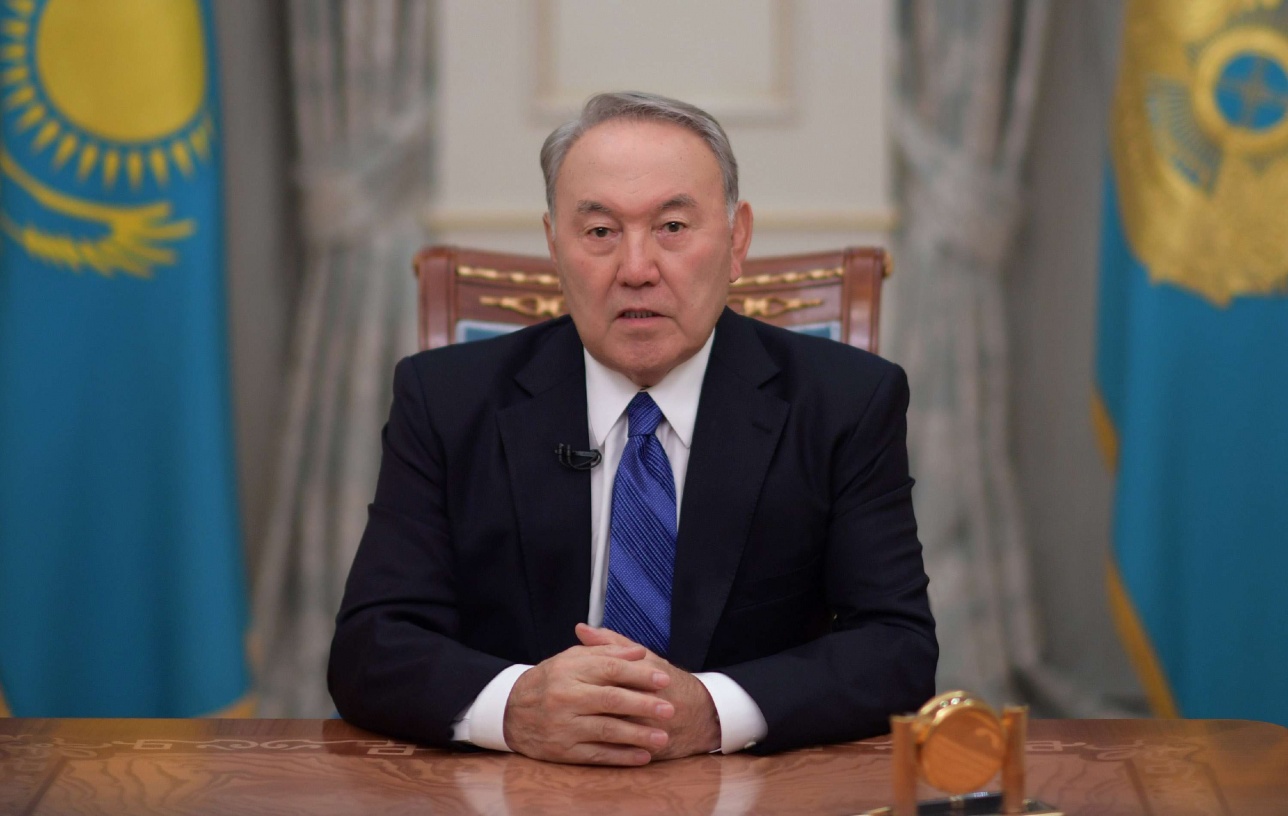
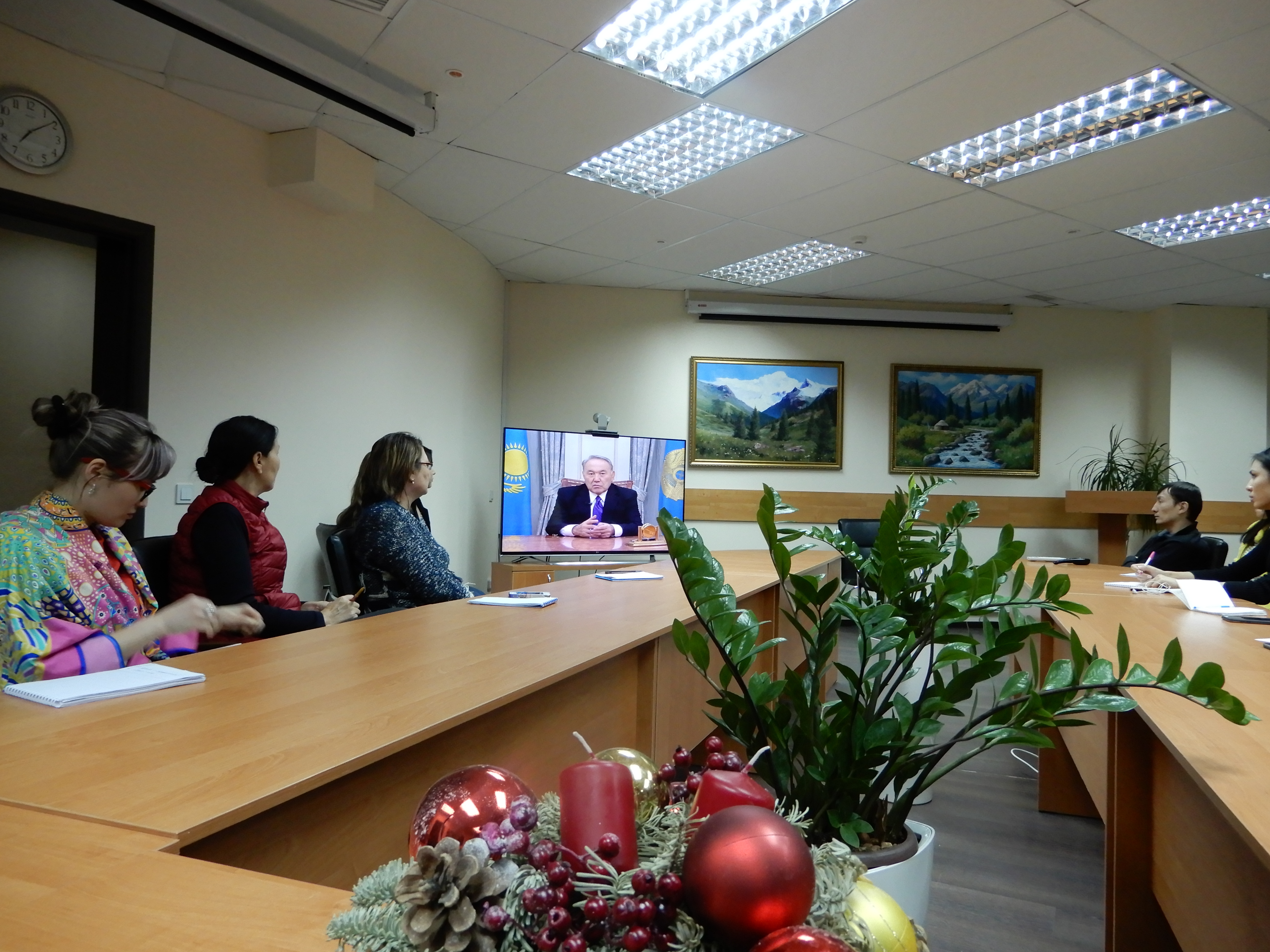
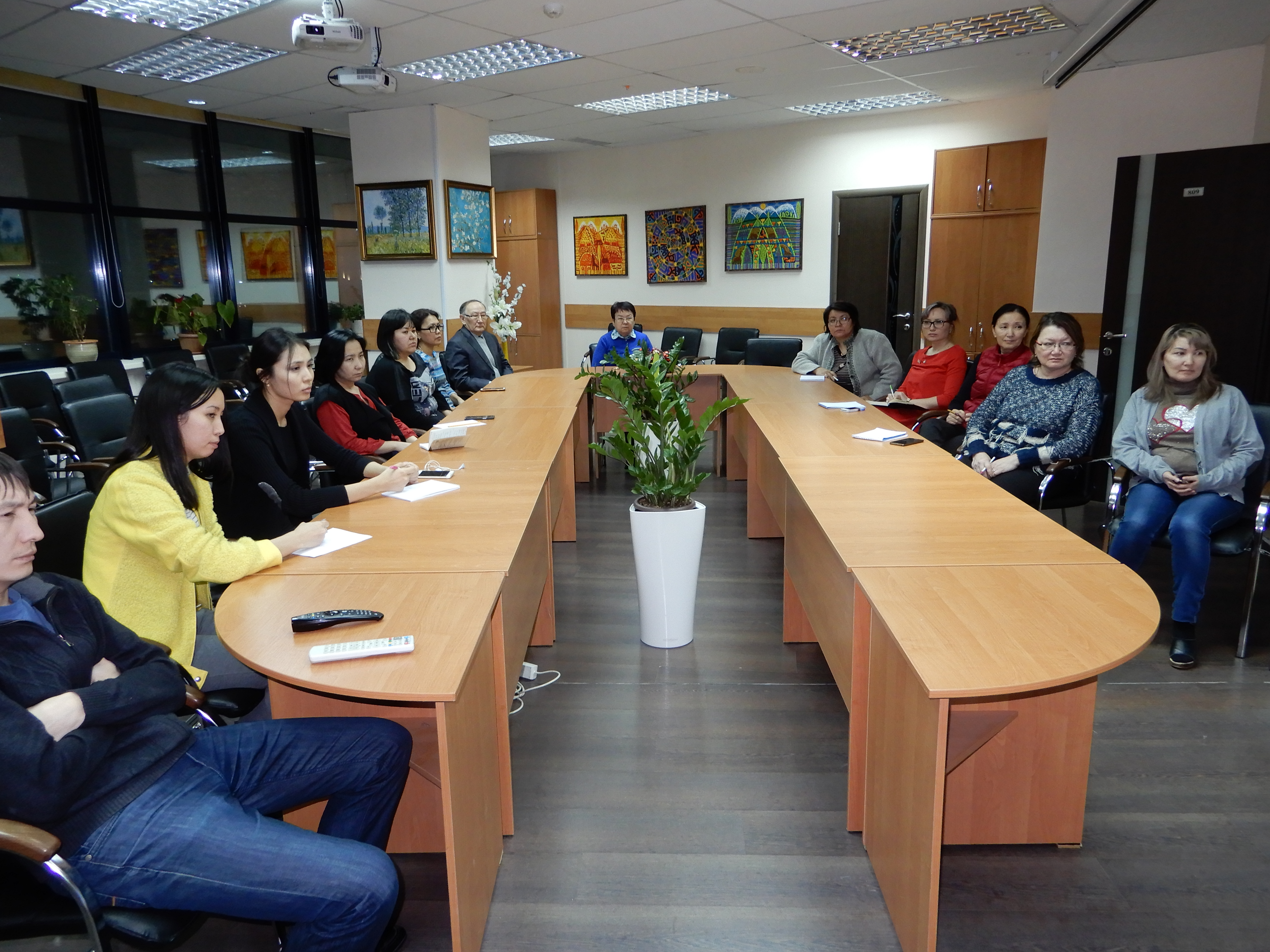
On January 9, 2018 at 19-00 pm the IQAA staff watched a live broadcast of a brief version of President Nursultan Nazarbayev's Address to the Nation of Kazakhstan "New Development Opportunities in the Context of the Fourth Industrial Revolution".
On January 10, 2018, the full text of the Address of the President of the Republic of Kazakhstan Nursultan Nazarbayev to the Nation of Kazakhstan was published on the website of Akorda. This Address includes 10 priority directions of the country's development in 2018:
First. Industrialization should become the flagship in the introduction of new technologies.
Second. Further development of the raw materials potential.
Third. "Smart technologies" - a chance for a breakthrough in the development of the agro-industrial complex.
Fourth. Increase in the efficiency of transport and logistics infrastructure.
Fifth. Introduction of modern technologies in construction and municipal sector.
Sixth. "Reloading" of the financial sector.
Seventh. Human capital is the basis of modernization.
Eighth. Effective public governance.
Ninth. Fighting corruption and the rule of law.
Tenth. "Smart cities" for the "smart nation".
The President emphasized that the education sector should be regarded as a separate branch of the economy with its investment projects and export potential. The Message clearly defines the tasks for the development of higher and vocational education in Kazakhstan for 2018:
1. The new quality of education. Creation of one's own advanced educational system covering citizens of all ages. Development of the ability to constantly adapt to changes and assimilate new knowledge.
2. The need to reconsider the role of agrarian universities, which "should not just issue diplomas, but prepare specialists ready to work in the agro-industrial complex or to engage in research activities". The task is to update the curricula on agricultural specialties and make agrarian universities the centers for disseminating the most advanced knowledge and best practice in the agro-industrial complex.
3. The need to revise the approaches to learning and the development of teachers' qualifications. The task is to develop pedagogical departments and faculties at universities, to strengthen the quality of teaching mathematical and natural sciences at all levels of education.
4. Work on active development of the "trilingual politicy". The future of Kazakhstani people is in good command of Kazakh, Russian and English languages.
5. The transition to the Latin alphabet until 2025 at all levels of education.
6. 6) Updating the training programmes in technical and vocational education with the involvement of employers and taking into account international requirements and digital skills. It is necessary to continue the implementation of the project "Free Vocational Education for All".
7. Uploading of online video lessons and video lectures on the Internet from the best secondary schools teachers, colleges and universities. This will allow all Kazakhstani people, including those living in remote settlements, to gain access to the best knowledge and competencies.
8. Increase in the number of graduates trained in information technologies, working with artificial intelligence and "big data".
9. Development of university science with a focus on research in metallurgy, oil and gas chemistry, agro-industrial complex, bio- and IT-technologies.
10. Gradual transition to English language in applied scientific research.
11. Active work of universities on the implementation of joint projects with leading foreign universities, research centers, and large enterprises.
12. Co-financing by the private sector is a mandatory requirement for all applied R & D projects.
13. The need for a systematic policy to support young scientists in Kazakhstan with the allocation of quotas within the framework of research grants.
14. Legislative consolidation of academic freedom of universities, giving them more rights to create study programs.
15. Strengthening the retraining of teachers, attraction of foreign managers to universities, opening campuses of world-class universities.
16. Development of contemporary standards in all major professions. The obligatory participation of employers and businessmen. Based on the requirements of professional standards, there is a need to develop new or to update existing study programmes.
The full text of the Address is presented on the official website of the President of the Republic of Kazakhstan.



 Ministry of Science, Higher Education and Innovation of the Kyrgyz Republic