HIGHER EDUCATION IN KAZAKHSTAN
According to the Bureau of National Statistics of the Agency for Strategic Planning and Reforms of the Republic of Kazakhstan, at the beginning of the 2023-2024 academic year in the Republic of Kazakhstan, the number of operating higher education institutions amounted to 112 organizations, including 77 universities, including research, 14 academies, 10 institutes, and equivalent conservatories, higher schools and higher schools, 8 national higher education institutions educational institutions, 3 national research universities.
Over the years of independence, the state has implemented large-scale reforms in the higher education system to improve the quality of specialist training. In 2010, Kazakhstan became a participant in the Bologna process; qualification requirements for licensing higher education institutions were strengthened; a ban on the activities of university branches was introduced; in 2018, legislative changes were made to expand the academic and managerial independence of universities; 27 state universities were transformed into non-profit joint-stock companies; and the League of Academic Integrity was established as an independent organization with On January 1, 2019, distance learning was canceled, and in recent years, the rules for admission to universities for grants have been strengthened.
At the beginning of the 2023-2024 academic year, the total number of students at universities amounted to 635,157 people, of whom 592700 were enrolled in bachelor's degree programs, 36491 in master's degree programs, and 5966 in doctoral programs.
The total number of teaching staff at the beginning of 2022-2023 amounted to 36.4 thousand teachers, of whom masters made up 39%, candidates of sciences - 29%, associate professors - 13%, doctors of philosophy (PhD) - 10%, doctors of sciences - 7%, professors - 6% and doctors in the profile - 1%.
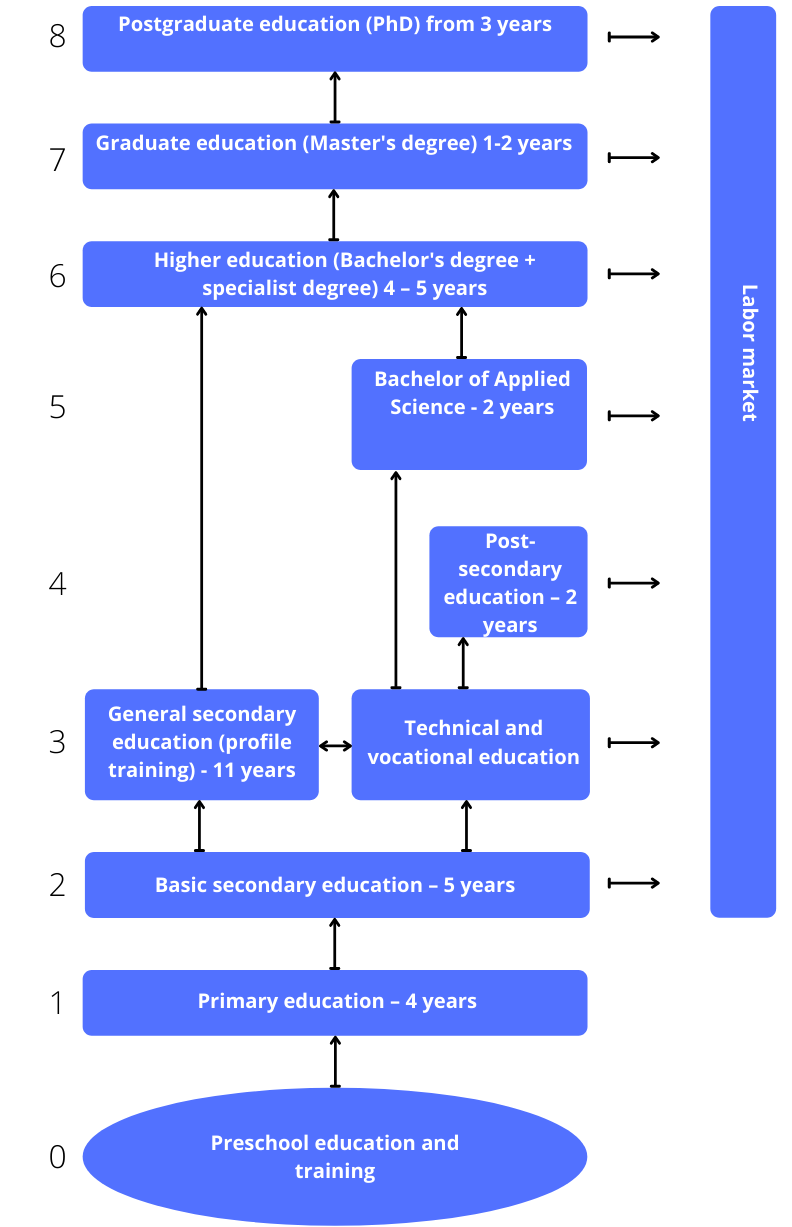
The education system of the Republic of Kazakhstan is characterized by multilevel and continuous development and includes the following levels of education:
- 0. Preschool education and training – 1/6 years
- 1. Primary education (4 years); entry - 6/7 years.
- 2. Basic secondary education; entry - 10/11 years.
- 3. Secondary education; entry - 15/16 years.
- - general secondary education;
- - technical and professional education: qualifications of a worker and a mid-level specialist, entry - 15/16 years;
- 4. Post-secondary education: qualifications of a worker with a high level of discharge; entry - 17/18 years.
- 5. Incomplete higher education – applied bachelor's degree; admission - 17/18 years.
- 6. Higher education: bachelor's degree, specialist qualifications for medical specialties; admission – 17/18 years.
- 7-8. Postgraduate education: Master's and PhD degrees.
The structure of higher and postgraduate education of the Republic of Kazakhstan is regulated by the Law "On Education" (dated July 27, 2007). With the signing of the Bologna Declaration in 2010, Kazakhstan is implementing a three-level system of higher education "Bachelor-Master- Ph.D.". This structure has found its legal consolidation in the Law of the Republic of Kazakhstan "On Education»:
1) Higher basic education – bachelor's degree program - with a duration of 4 years;
2) Postgraduate education, including the scientific and pedagogical direction of training-the master's program-with the duration of training in the profile master's program – 1 year, in the scientific and pedagogical – 2 years;
3) The program of preparation of doctors of philosophy (PhD), doctors in the profile-doctoral studies-after completion of master's programs. The duration of training is at least 3 years or more.
According to the Bologna Declaration, the introduction of a system of credits or credits ensures the recognition of educational programs. The introduction of credit technology of training is a significant contribution to the recognition of national educational programs at the international level, ensuring the mobility of students and teachers, as well as improving the quality of education and ensuring the continuity of all levels and stages of higher and postgraduate education. Consequently, all universities in the country use the Kazakhstan credit transfer model, developed according to the ECTS type. ECTS (European Credit Transfer and Accumulation System) is a universal system for measuring the academic load of a student during the development of an educational program or a separate course.
Admission to higher educational institutions of the Republic of Kazakhstan is carried out by the Standard Rules for admission to educational organizations implementing professional training programs of higher and postgraduate education, approved by order of the Minister of Education and Science of the Republic of Kazakhstan dated October 31, 2018. Persons with general secondary, technical vocational, post-secondary, and higher education are accepted to universities.
Admission to universities is carried out according to the results of passing the Unified National Testing (UNT) based on a state educational order or a paid basis.
According to the Rules of the unified national testing and the provision of public services "Issuance of a certificate of passing the unified national testing", graduates can take the UNT 5 times. Applicants who have passed the UNT from May to July can participate in the competition for a state educational grant award.
In March 2010, Kazakhstan officially joined the Bologna Declaration and became the 47th member of the European Higher Education Area and the first Central Asian state to be recognized as a full member of the European Educational Area.
The transition to a multi-level training model in accordance with the Bologna Process is fully completed. According to the National Report on the State and Development of the Education System of the Republic of Kazakhstan (based on the results of 2019), undergraduates are trained in 118 universities of the country, where 32,527 people study, of which 16,220 study at the expense of the state order. The graduation rate of undergraduates with a defense is 92%. Currently, the system of higher education in Kazakhstan, which has implemented the American-style credit system, is changing, as the European Credit Transfer and Accumulation System (ECTS), the pan-European system of accounting for students' academic work during the development of an educational program or course, is being introduced. The new ECTS Guidelines approved at the Yerevan Conference of European Ministers of Education on May 14-15, 2015 are being implemented. In recent years, the academic mobility of teaching staff and students has been actively developing. Exchange programs are financed from the state budget and the universities' own funds.
The COVID-19 pandemic has made significant adjustments to the educational process. All universities in the country were forced to switch to an online learning format in order to adapt to the new reality. Although the pandemic has had the greatest impact on higher education on a global scale, it is worth noting that it has become one of the few areas in Kazakhstan prepared to transfer its processes to a distance format.
Since March 16, 2020, 116 universities of the country have switched to distance learning. The vast majority of students studied at home, but 5 thousand Kazakh students and 4 thousand foreign students remained in the dormitories at the place of study, as the conditions for distance learning were created in the dormitories.
The country's universities have already had some experience in implementing distance learning technologies in the learning process, as some universities used a mixed form of education, while others used a distance-learning format. Universities use special platforms, such as ZOOM, Platonus, Moodle, Microsoft Teams, Cisco Webex, and others. A number of universities use self-developed platforms. In the difficult situation of the pandemic, universities supported their employees and teaching staff in organizing training courses. All universities and colleges have HelpDesk, a system that provides technical support to students and teachers. Regular surveys of students, faculty, and staff on satisfaction are conducted to obtain up-to-date information and improve the educational process.
PRESCHOOL AND SECONDARY EDUCATION ACCREDITATION
Accreditation of educational organizations is a procedure of recognition by the accreditation body of conformity of educational services to the established standards (regulations) of accreditation in order to provide objective information on their quality and to confirm the availability of effective mechanisms for its improvement (subparagraph 16 of Article 1 of the Law of the Republic of Kazakhstan ‘On Education’).
1. Providing a mechanism for ensuring the quality and effectiveness of the educational process in preschool and secondary education organizations.
2. Stimulating the activities of the organization in the direction of improving the quality of preschool and secondary education and upbringing.
3. Providing a real opportunity for parents of preschool and secondary education children to choose an individual educational route for their child from a wide range of high-quality educational services.
- Procedure for accreditation of preschool and secondary education organizations is carried out voluntarily;
- Focus on improving the quality of preschool education and upbringing;
- Integrity and transparency: internal and external evaluations are conducted fairly and transparently, and information is made available to all participants in the ongoing accreditation process;
- Objectivity and independence: internal and external evaluation is conducted objectively, independently of third parties;
- Responsibility of educational organizations: the primary responsibility for the quality of education and upbringing is assigned to the preschool and secondary education organizations;
- Quality assurance takes into account the needs of children, all other stakeholders, and society as a whole.
ACCREDITATION OF TECHNICAL AND VOCATIONAL EDUCATION
The institutional and program accreditation procedures are developed by the Agency under European and international standards, which include the following stages:
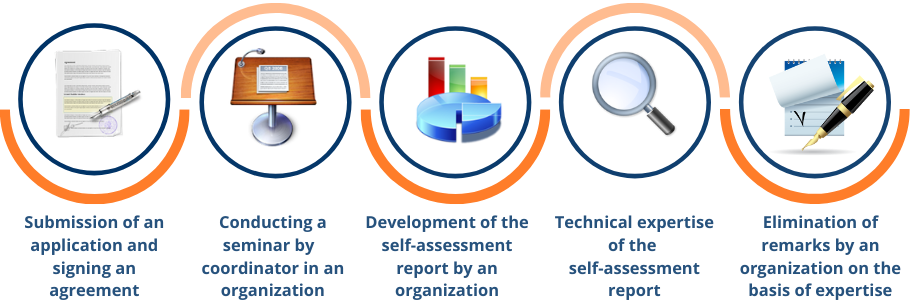
• submission by the college of an application for accreditation to the Agency with copies of the general license and licenses for educational programs;
• conclusion of an accreditation agreement between IQAA and the educational organization;
• appointment of a coordinator, conducting a training workshop for the college working group on the preparation of the self-assessment report;
• establishment of an internal quality assurance system by the educational institution, preparation of a self-assessment report in accordance with IQAA standards and criteria;
• submission of the first version of the self-assessment report and technical review of the IQAA self-assessment report. The results of the technical expertise are sent to the TVET organization, and if necessary, the self-assessment report is finalized by the educational organization;
• submission of the final self-assessment report and its annexes to the Agency.
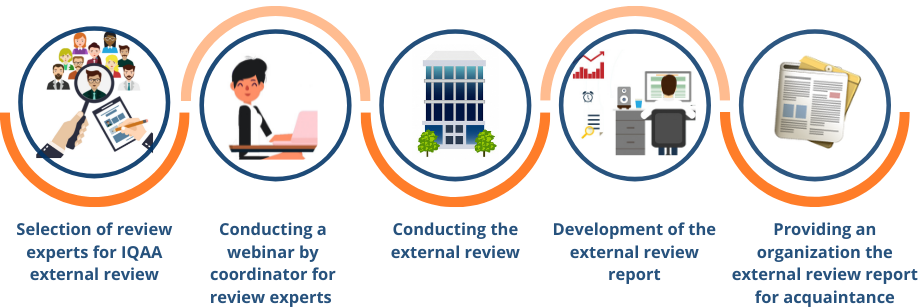
• the IQAA forms a competent group of experts (auditors), which includes representatives of educational institutions of Kazakhstan, the employer and the student; the group is formed in parallel during the technical analysis of the self-assessment report;
• the Agency informs the educational organization about the composition of the expert group on external audit. If the TVET organization suspects a conflict of interest among any of the auditors, they have the right to apply to the Agency to replace the expert (auditor), attaching a written reasoned explanation;
• the coordinator sends the self-assessment materials and methodological support several weeks in advance to the members of the expert group to prepare for the external audit;
• the coordinator conducts a preliminary webinar for the expert group to train experts and discuss organizational audit issues, and a briefing before the visit to the educational organization;
• the external audit to the educational organization (3 days for institutional accreditation, 2 days for one cluster of educational programs for program accreditation) is organized. An external audit is conducted to assess the reliability of the information provided in the self-assessment report, the actual state of affairs in the educational organization;
• the expert group generates an external evaluation report (with comments and recommendations) according to the approved template, which is sent to the coordinator;
• the IQAA coordinator sends the received report of the expert group on the assessment of the activities of the TVET organization to the educational organization to eliminate factual inaccuracies, if any;
• the TVET organizations may have access to a complaint procedure, if necessary.
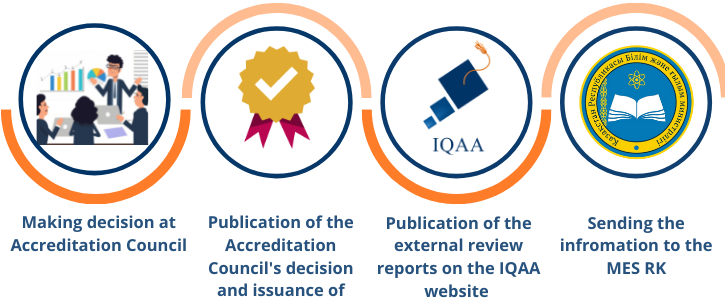
• basing on the self-assessment report and the external audit report, the Agency coordinator prepares an opinion, which is approved by the Expert Council, and a presentation for the Accreditation Council;
• holding a meeting of the IQAA Accreditation Council and making a decision on the accreditation of the TVET organization or educational program. The Accreditation Council independently makes decisions based on the self-assessment report and the external audit report, presentation, and conclusion. However, taking into account the views of the members of the Accreditation Board, additional information about the specific program, and the evidence base for the organization of TVET, the assessment may be changed
• informing the TVET organization and the members of the expert group that conducted the external audit about the decision on accreditation;
• having access to the appeal procedure by the TVET organizations if necessary publishing;
• publishing of the external audit report, presentation, and accreditation results on the Agency's website. Inclusion of an accredited TVET organization /educational program in the IQAA register on the website in the tabs "Register of decisions and reports of TVET organizations";
• sending information to the Ministry of Education and Science of the Republic of Kazakhstan for inclusion of an accredited TVET / educational program organization in the relevant National Register.
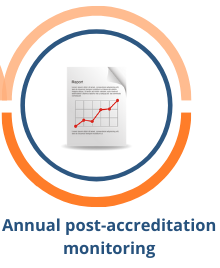
• Implementation of regular post-accreditation monitoring by the Agency.

SUBMIT AN APPLICATION
DEAR PROSPECTIVE STUDENTS AND THEIR PARENTS
Our agency is a nonprofit organization established to improve the quality of education and competitiveness of Kazakhstani educational institutions; to provide information to stakeholders in Kazakhstan and abroad regarding the excellence of particular educational organizations.
IQAA is included in the National Register of the authorized body (Order No. 304 of the Ministry of Education and Science of the Republic of Kazakhstan dated June 27, 2012) and has certificate No. 001. According to Order No. 112 of the Ministry of Education and Science of the Republic of Kazakhstan dated March 14, 2017, IQAA re-entered Register 1, extending its term by another five years.
In specific, accreditation is a process by which a governmental or non-governmental body evaluates the quality of an educational organization as a whole or a specific study program to formally recognize that it has met certain pre‐determined minimal criteria or standards. The result of this process is usually the awarding of a status (yes/no decision) of recognition, and sometimes of a license to operate within a time‐limited validity.
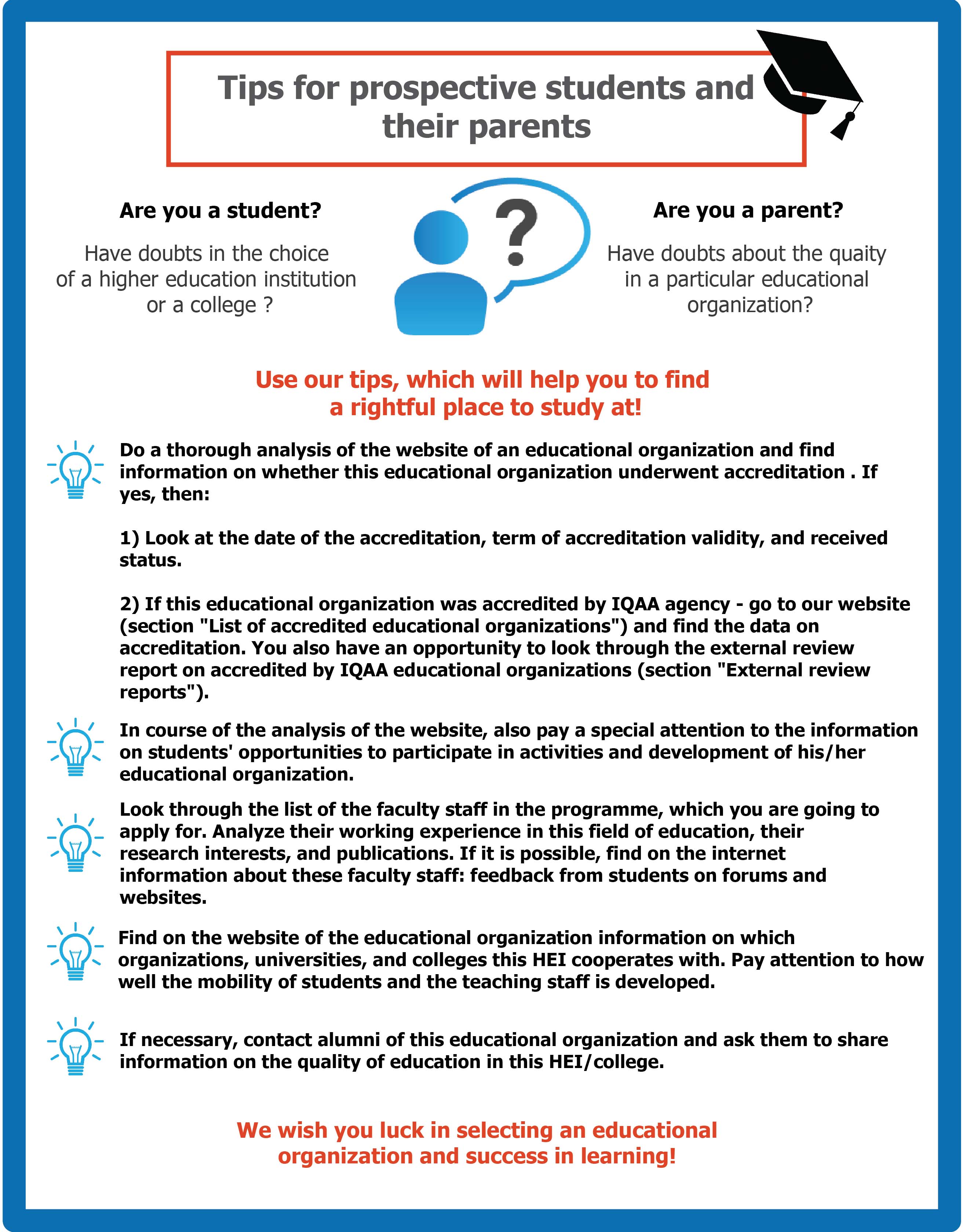
Thus, we officially recognize the quality of accredited educational institutions and study programs, and we want you to be confident in the choice of your educational organization. To do this, on our official website you can find a Register accredited by IQAA higher education institutions, TVET organizations, and study programs. In addition, you can also analyze external review reports on specific educational organizations and study programs. If you need some external review reports, which are not published on the website, you can send a request for a specific report and we will be happy to provide you this information if it is possible.
We also want to pay your attention to the fact that passing accreditation by educational organizations is not the final point in the process of quality assurance of this organization. After receiving the status on accreditation (accredited for 5 or 2 years), IQAA conducts post-accreditation monitoring, in the course of which the agency controls the process of implementing the recommendations on improvement of the activities carried out by these educational organizations.
Our agency strives to hold an open and active dialogue with stakeholders, especially students and their parents.
Join our official pages on Facebook, Twitter, and YouTube and be aware of activities carried out by our agency and accredited by IQAA educational institutions and study programs.
Your trust and cooperation are very important to us!
A GUIDE FOR STUDENT EXPERTS
The guide for student experts participating in the procedures of institutional and specialized (program) accreditation is designed to instruct students in the field of quality assurance of higher education, on the procedures and standards of accreditation of the Independent Agency for Quality Assurance in Education (IQAA). It aims to clarify the role of students in their participation in the external audit. Moreover, the guide is aimed at familiarizing and studying the procedure and standards of external quality assessment of universities by students involved in the IQAA accreditation procedures.
When developing the guide, the experience of the European Union of Students on the QUEST project was used. The QUEST project was created to expand and support student participation in quality assurance processes. The project was funded by the EU's Lifelong Learning Program, which includes the Agency for Increasing Student Participation in Quality Processes in Scotland (Sparqs), the Romanian Agency for Quality Assurance in Higher Education, and the Free Association of Local Student Bodies in Germany (fzs).
STUDENT PARTICIPATION IN ACCREDITATION PROCESSES
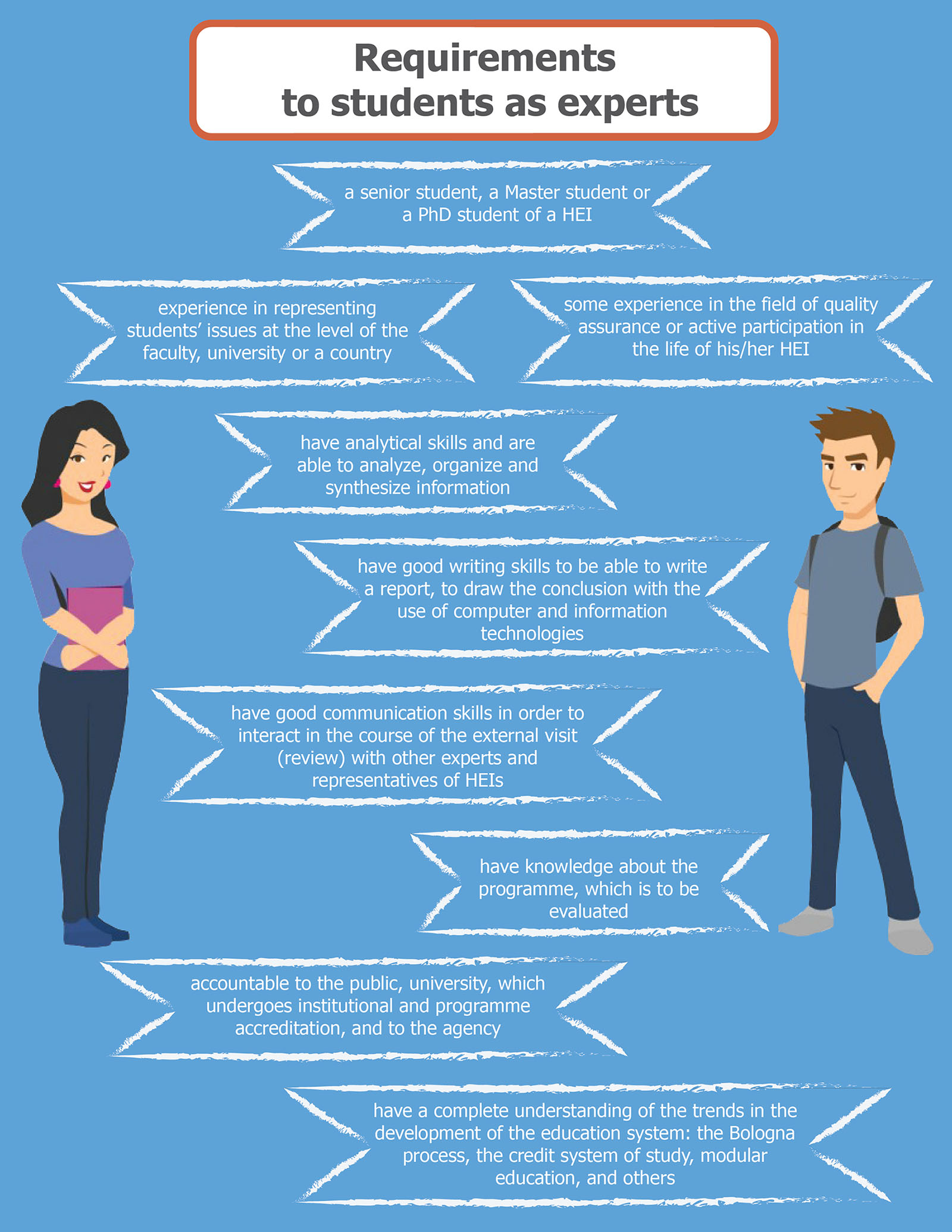
Our agency ensures the active participation of students in the process of evaluation of educational organizations and promotion of students' interests.
Under the Regulations of the Independent Agency for Quality Assurance in Education (IQAA), the Accreditation Council, which makes the final decision on accreditation, expert groups on external audit, must include representatives of students. In addition, students are required to participate in the IQAA's institutional and specialized accreditation procedures.
Students perform several functions in expert groups on external audits of universities and educational programs. First, the student representative evaluates the situation from their point of view. Secondly, students who are selected for the expert group usually already have experience of such work either at the university level or at the national level.
To prepare students for participation in external audits, the Independent Agency for Quality Assurance in Education (IQAA) conducts regular training seminars, both for all experts and separately for expert students. The agency's Analysis and Quality Department develops informational videos specifically for students, which demonstrate the various stages of accreditation in an entertaining and accessible form and explain the role of students in the quality assurance process in education.
Students are informed about the agency's activities and quality assurance procedures through the official pages on Facebook, Twitter, and YouTube.
DEAR STUDENTS
Our agency continuously works to protect your rights to receive a quality education in higher and technical educational institutions of Kazakhstan. Students are a central part of the educational process in universities and colleges, so it is your opinion that plays an important role in the process of evaluating the effectiveness of the content and organization of educational programs and the activities of educational organizations. It is very important for us that every student is aware of their rights to participate in the development of their educational institution, and also understands the importance of ensuring the quality of education.
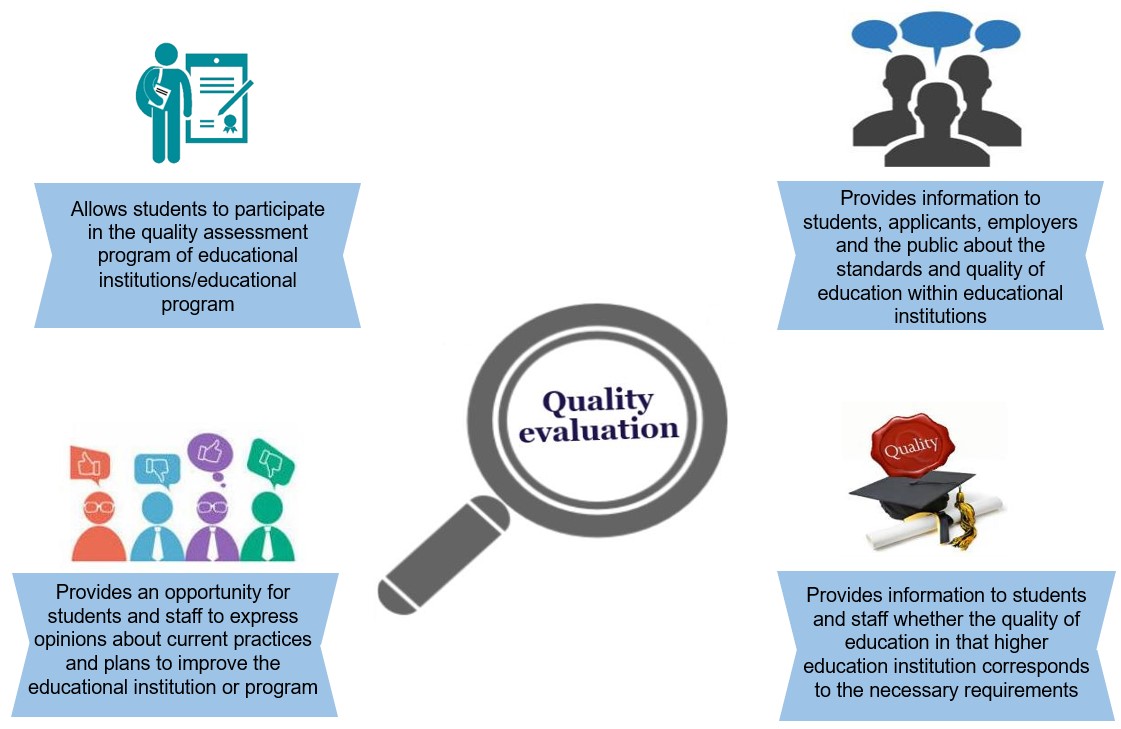
Students, as the main recipients of educational services, should participate in the external evaluation procedure of the educational organization and/or its program and perform the role of experts in areas that are directly related to the student: evaluating the material and technical base of the university or college, organizing the process of educational and extracurricular activities of students, student self-government processes and following the student-centered approach in education. The last point is the fundamental principle of the Bologna reforms in higher education, which implies a shift in the educational process from teaching (as the main role of the teaching staff in the "translation" of knowledge) to educating (as the active activity of the student in learning).
Thus, the participation of students in the accreditation procedures helps to protect the rights and interests of students, changes their student experience for a better, and also adds legitimacy to the conclusions of the expert group.
If you are a student and would like to participate in quality assurance procedures in education, or if you have any questions about accreditation procedures, please contact us and we will answer you. For more information on student participation in IQAA accreditation procedures, see the "Student Participation in Accreditation Processes" tab.
CROSS-BORDER ACTIVITIES
More people are getting higher education from foreign suppliers, and at the same time, there is a growing need for quality assurance of services. The new Guidelines for Quality Assurance in Cross-Border Higher Education, jointly developed by UNESCO and the OECD, address this need.
Cross-border higher education has grown significantly over the past two decades, thanks to increased mobility of students and faculty, as well as new ways of delivering knowledge, such as online learning. These events open up new opportunities for people and societies, but at the same time, they raise questions about quality, reliability, and recognition of such education.
In response to this, the UNESCO/OECD guidelines call on governments and other stakeholders, including higher education institutions, student organizations, and organizations responsible for quality assurance, accreditation, academic and professional recognition, to take action based on the three main principles:
- Mutual trust and respect between countries and recognition of the importance of international cooperation in higher education;
- Recognition of the importance of national authority and the diversity of higher education systems;
- Recognition of the importance of higher education as a means of expressing the linguistic and cultural diversity of the country, as well as for promoting its economic development and social cohesion.
The guide is designed to help students gain easy access to reliable information about higher education offered outside of their home country or by foreign providers in their home country. It calls on Governments and other stakeholders to make qualifications more transparent and to provide greater clarity in the procedures for their recognition at the international level.
This is the first time that UNESCO and the OECD have collaborated in developing guidelines in this way. Although they are not binding, their endorsement by two international organizations of more than 190 countries gives them considerable strength.
Specific recommendations include:
- Inviting national governments to establish comprehensive quality assurance and accreditation systems for cross-border higher education, recognizing that this applies to both sending and receiving countries;
- Inviting higher education institutions and educational service providers to ensure that the programs they implement across borders and in their home country are of comparable quality and that they also take into account the cultural and linguistic characteristics of the host country;
- Inviting student organizations to participate as active partners at the international, national and institutional levels in the development, monitoring and maintenance of the quality of cross-border higher education.
БЮЛЛЕТЕНЬ ПО МЕЖДУНАРОДНОМУ ОБЗОРУ ВЫСШЕГО ОБРАЗОВАНИЯ
"ВЫСШЕЕ ОБРАЗОВАНИЕ В МИРЕ"

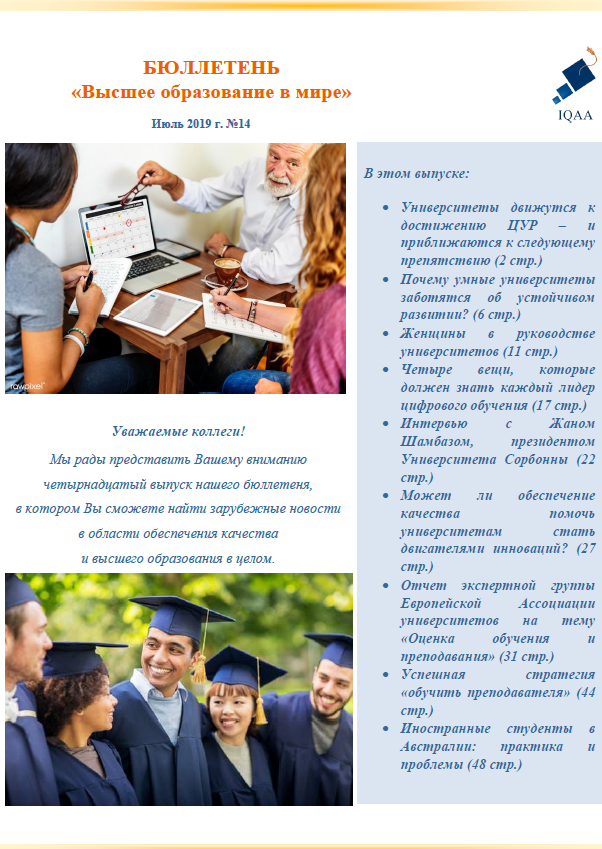
More...
БЮЛЛЕТЕНИ ПО МЕЖДУНАРОДНОМУ ОБЗОРУ ТиПО
Март 2019 г. №1
Июль 2019 г. №2
Ноябрь 2019 г. №3
Декабрь 2019 г. №4
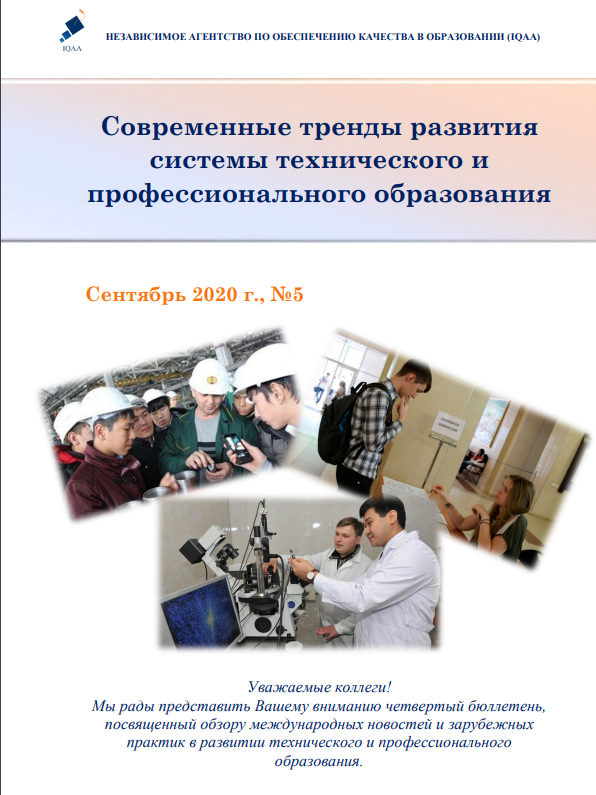
Сентябрь 2020 г. №5
ВЫСШЕЕ И ПОСЛЕВУЗОВСКОЕ ОБРАЗОВАНИЕ В КАЗАХСТАНЕ
По данным Бюро Национальной статистики Агентства по стратегическому планированию и реформам республики Казахстан на начало 2023-2024 учебного года в Республике Казахстан число действующих высших учебных заведений составило 112 организаций, из них 77 университетов, в том числе исследовательских, 14 академий, 10 институтов и приравненных к ним консерваторий, высших школ и высших училищ, 8 национальных высших учебных заведений, 3 национальных исследовательских университета.
За годы независимости в целях повышения качества подготовки специалистов государством были осуществлены масштабные реформы в системе высшего образования. В 2010 году Казахстан стал участником Болонского процесса, были усилены квалификационные требования к лицензированию высших учебных заведений, введен запрет на деятельность филиалов вузов, в 2018 году законодательно внесены изменения по расширению академической и управленческой самостоятельности вузов, 27 государственных вузов преобразованы в некоммерческие акционерные общества, создана Лига Академической честности как независимая и самостоятельная организация, с 1 января 2019 года отменено заочное обучение, в последние годы усилились правила приема в вузы по грантам.
На начало 2023-2024 учебного года общая численность студентов в ВУЗах составила 635157 человек, из них обучающихся по программам бакалавриата – 592700, по программам магистратуры - 36491, по программам докторантуры – 5966 человек.
Общая численность ППС на начало 2022-2023 года составила 36,4 тыс. преподавателей, из них магистры составили 39%, кандидаты наук - 29%, доценты - 13%, доктора философии (PhD) - 10%, доктора наук - 7%, профессора - 6% и доктора по профилю - 1%.
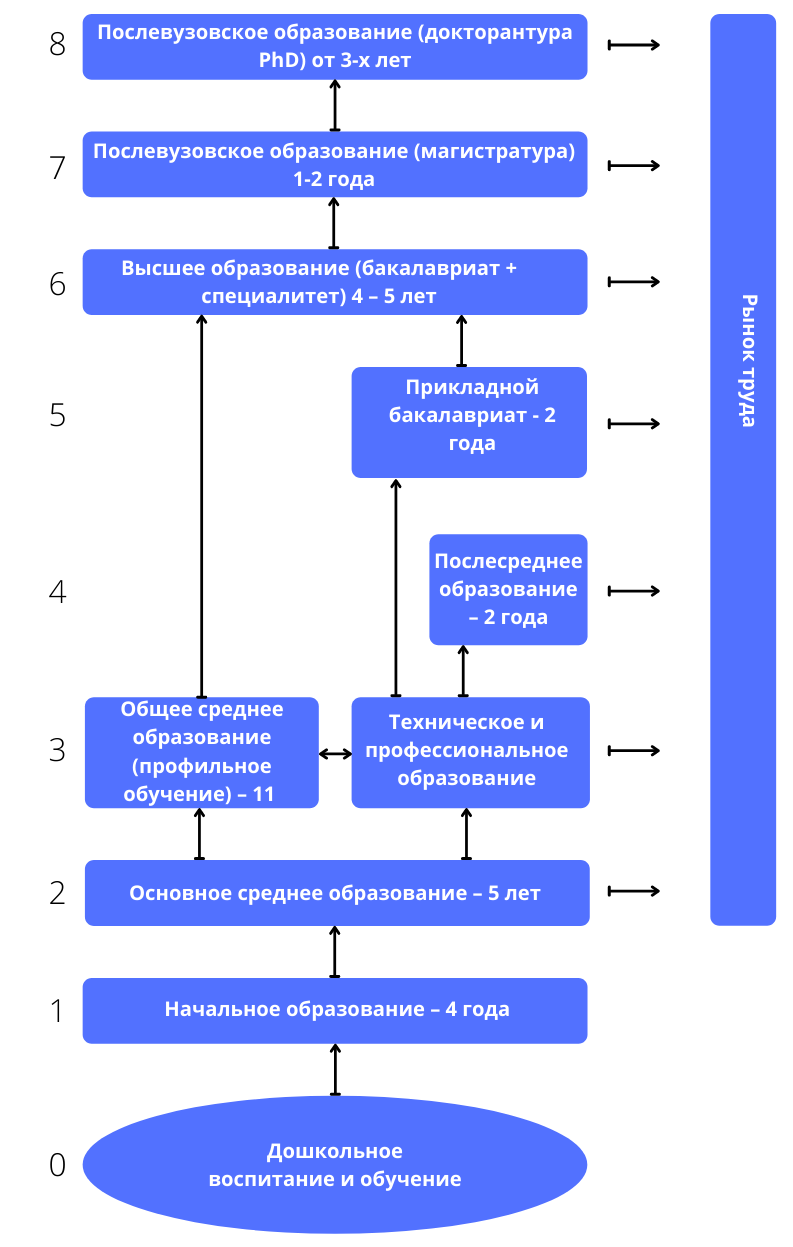
Система образования Республики Казахстан характеризуется многоуровневостью и непрерывностью и включает следующие уровни образования:
- 0. Дошкольное воспитание и обучение - 1/6 лет
- 1.Начальное образование (4 года); вход - 6/7 лет.
- 2. Основное среднее образование; вход - 10/11 лет.
- 3. Среднее образование; вход - 15/16 лет.
- - общее среднее образование
- - техническое и профессиональное образование: квалификации рабочего и специалиста среднего звена, вход - 15/16 лет
- 4. Послесреднее образование: квалификации рабочего с высоким уровнем разряда; вход - 17/18 лет.
- 5. Неполное высшее образование – прикладной бакалавриат; вход - 17/18 лет
- 6. Высшее образование: квалификации бакалавра, специалиста для медицинских специальностей; вход – 17/18 лет.
- 7-8. Послевузовское образование: квалификации магистра и доктора PhD.
Структура высшего и послевузовского образования Республики Казахстан регламентируется Законом «Об образовании» (от 27 июля 2007 года). С подписанием Болонской декларации в 2010 году, Казахстан реализует трехуровневую систему высшего образования «бакалавр-магистр-доктор PHD». Данная структура нашла свое правовое закрепление в Законе Республики Казахстан «Об образовании»:
1) Высшее базовое образование – программа бакалавриата – с продолжительностью обучения 4 года;
2) Послевузовское образование, включающее научно-педагогическое
направление подготовки – программа магистратуры – с продолжительностью обучения в профильной магистратуре – 1 год, в научно-педагогической – 2 года;
3) Программа подготовки докторов философии (PhD), докторов по профилю – докторантура – после завершения программ магистратуры. Продолжительность обучения – минимум 3 года и более.
Согласно Болонской Декларации введение системы зачетных единиц или кредитов обеспечивает признание образовательных программ. Внедрение кредитной технологии обучения является существенным вкладом в признании национальных образовательных программ на международном уровне, обеспечении мобильности студентов и преподавателей, а также повышении качества образования и обеспечения преемственности всех уровней и ступеней высшего и послевузовского образования. Следовательно, все ВУЗы страны используют казахстанскую модель перезачёта кредитов, разработанную по типу ECTS. ECTS (European Credit Transfer and Accumulation System/Европейская система перевода зачетных единиц) - универсальная система измерения учебной нагрузки студента при освоении образовательной программы или отдельного курса.
Прием в высшие учебные заведения Республики Казахстан осуществляется в соответствии с Типовыми правилами приема на обучение в организации образования, реализующих профессиональные учебные программы высшего и послевузовского образования, утвержденных Приказом Министра образования и науки Республики Казахстан от 31 октября 2018 года. В вузы принимаются лица, имеющие общее среднее, техническое и профессиональное, послесреднее, высшее образование.
Поступление в вузы осуществляется по результатам сдачи Единого национального тестирования (ЕНТ) на основе государственного образовательного заказа или на платной основе.
Согласно Правилам проведения единого национального тестирования и оказания государственных услуг «Выдача сертификата о сдаче единого национального тестирования» выпускники могут сдавать ЕНТ 5 раз. Абитуриенты, сдавшие ЕНТ в период с мая по июль месяцы, могут участвовать в конкурсе на присуждение государственного образовательного гранта.
В марте 2010 года Казахстан официально присоединился к Болонской декларации и стал 47-м членом Европейского пространства высшего образования и первым государством Центральной Азии, признанным полноправным членом европейского образовательного пространства.
В связи с подписанием Болонской декларации, Приказом МОН РК в начале 2011 г. была введена кредитная технология обучения разработанная на основе ECTS (European Credit Transfer and Accumulation System/Европейская система перевода зачетных единиц) для всех вузов Казахстана, для повышения мобильности студентов и преподавателей, качества образования.
Трудоемкость одного казахстанского академического кредита (30 академических часов) соответствует 1 кредиту ECTS (25-30 академических часов). Коэффициенты перерасчета кредитов по системе ECTS меняются в зависимости от уровня образования и видов обучения (теоретические, лабораторные, студийные и т.д.). Планирование педагогической нагрузки профессорско-преподавательского состава осуществляется в академических часах или кредитах.
Пандемия COVID-19 внесла существенные коррективы в учебный процесс. Все вузы страны были вынуждены перейти на онлайн формат обучения, чтобы адаптироваться к новой реальности. Хотя пандемия оказала на сферу высшего образования наибольшее влияние в глобальном масштабе, стоит отметить, что она стала одной из немногих сфер в Казахстане, подготовленных к переводу своих процессов в дистанционный формат.
С 16 марта 2020 года 116 вузов страны перешли на дистанционное обучение. Подавляющее большинство студентов обучались дома, однако 5 тысяч казахстанских студентов и 4 тысячи иностранных студентов остались в общежитиях по месту обучения, так как в общежитиях были созданы условия для дистанционного обучения.
Вузы страны уже имели определенный опыт внедрения дистанционных технологий в процесс обучения, так как некоторые вузы использовали смешанную форму обучения, а другие – дистанционный формат. Вузы используют специальные платформы, такие как ZOOM, Platonus, Moodle, Microsoft Teams, Webex Cisco и другие. Ряд университетов использует самостоятельно разработанные платформы. В непростой ситуации пандемии вузы оказали поддержку своим сотрудникам и ППС в организации обучающих курсов. Во всех вузах и колледжах работает HelpDesk-система, которая предоставляет техническую поддержку студентам и преподавателям. Регулярно проводятся анкетирования студентов, ППС и сотрудников по удовлетворенности для получения актуальной информации и улучшения образовательного процесса.
Трансграничная деятельность
Всё больше и больше людей получают высшее образование у иностранных поставщиков, и вместе с тем растет потребность в гарантии качества услуг. Новые Руководящие принципы обеспечения качества в трансграничном высшем образовании, совместно разработанные ЮНЕСКО и ОЭСР, направлены на удовлетворение этой потребности.
Трансграничное высшее образование значительно выросло за последние два десятилетия благодаря возросшей мобильности студентов и профессорско-преподавательского состава, а также благодаря новым способам доставки знаний, таким как онлайн обучение. Эти события открывают новые возможности для людей и обществ, но в то же время они поднимают вопросы о качестве, надежности и признании подобного образования.
В ответ на это руководящие принципы ЮНЕСКО/ОЭСР призывают правительства и другие заинтересованные стороны, включая высшие учебные заведения, студенческие организации и организации, ответственные за обеспечение качества, аккредитацию, академическое и профессиональное признание – принять меры, основанные на трех основных принципах:
- Взаимное доверие и уважение между странами и признание важности международного сотрудничества в области высшего образования;
- Признание важности национальной власти и разнообразия систем высшего образования;
- Признание важности высшего образования как средства выражения языкового и культурного разнообразия страны, а также для содействия ее экономическому развитию и социальной сплоченности;
Руководство предназначено для того, чтобы помочь студентам получить легкий доступ к достоверной информации о высшем образовании, предлагаемом за пределами их родной страны или иностранными поставщиками в их стране. Оно призывает правительства и другие заинтересованные стороны сделать квалификационные требования более прозрачными и обеспечить большую ясность в процедурах их признания на международном уровне.
Это первый случай, когда ЮНЕСКО и ОЭСР сотрудничают в разработке руководящих принципов таким образом. Хотя они не являются обязательными, их одобрение двумя международными организациями, объединяющими более 190 стран, придает им значительную силу.
Конкретные рекомендации включают:
- Приглашение правительствам стран создать всеобъемлющие системы обеспечения качества и аккредитации для трансграничного высшего образования, признавая, что это касается как направляющие, так и принимающие страны;
- Приглашение высшим учебным заведениям и поставщикам образовательных услуг проконтролировать, что программы, которые они реализуют через границы и в своей стране, были сопоставимого качества, и чтобы они также учитывали культурные и языковые особенности принимающей страны.
- Приглашение студенческим организациям принять участие в качестве активных партнеров на международном, национальном и институциональном уровнях в разработке, мониторинге и поддержании качества трансграничного высшего образования.
НОРМАТИВНО-ПРАВОВЫЕ ДОКУМЕНТЫ РК
Образование признано одним из важнейших приоритетов долгосрочной Стратегии «Казахстан - 2050». Общей целью образовательных реформ в Казахстане является адаптация системы образования к новой социально-экономической среде. Президентом Казахстана была также поставлена задача о вхождении республики в число 30-ти наиболее конкурентоспособных стран мира. Совершенствование системы образования играет важную роль в достижении этой цели.
Организационной основой реализации государственной политики Республики Казахстан в сфере образования является Государственная программа развития образования Республики Казахстан, обеспечивающая государственную политику и модернизацию казахстанского образования.
Программа представляет собой комплекс взаимоувязанных по ресурсам и срокам мероприятий, охватывающих изменения в структуре, содержании и технологиях образования и воспитания, системе управления, организационно-правовых формах субъектов образовательной деятельности и финансово-экономических механизмах.

 Ministry of Science, Higher Education and Innovation of the Kyrgyz Republic